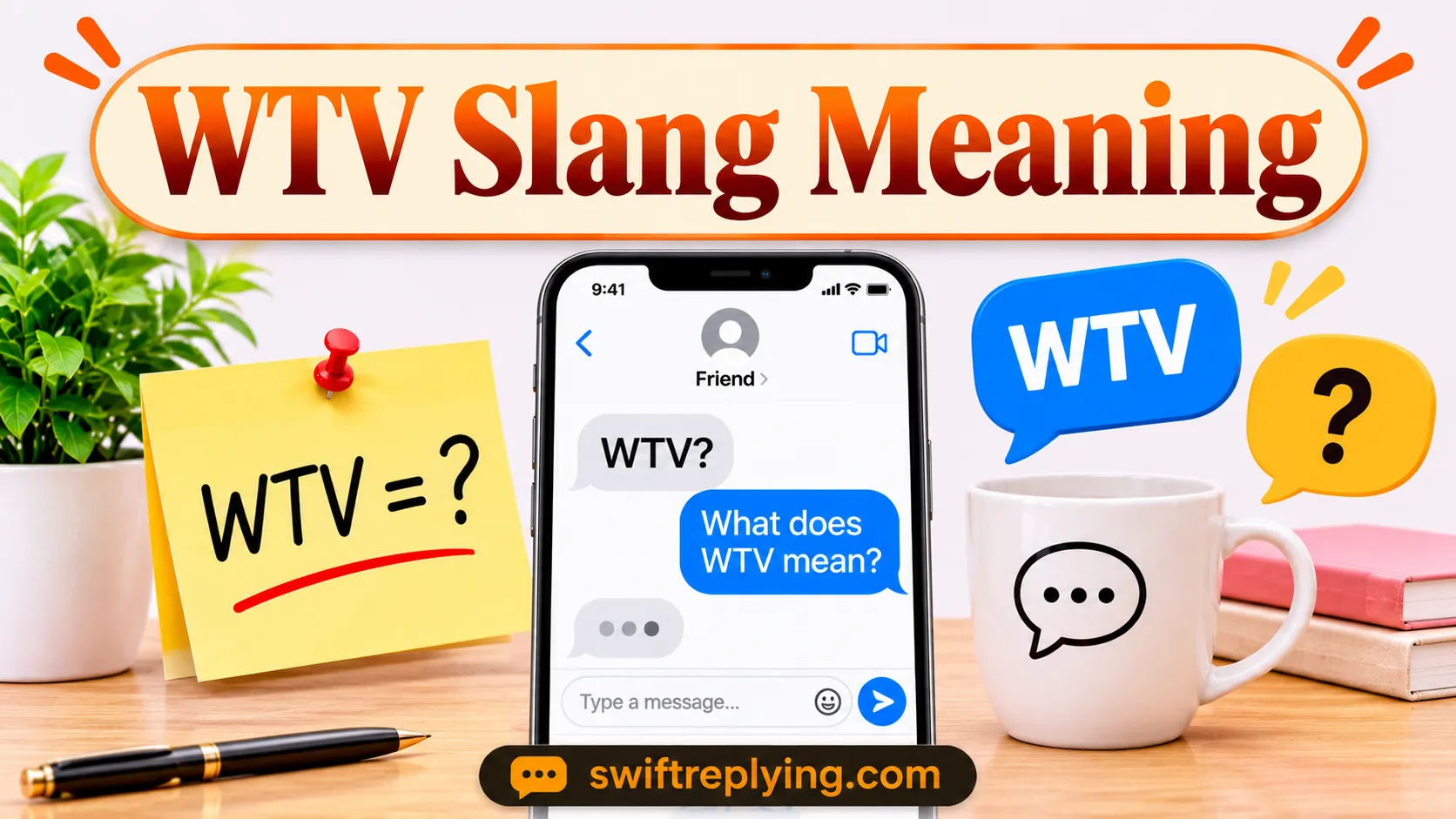
Have you ever received a message that simply says “WTV” and wondered what the person meant? This short slang term appears in text messages, social media comments, and everyday online conversations. Although it looks simple, its meaning can depend on the conversation and the tone behind it.
Most of the time, WTV means “whatever.” People use it to show that they don’t mind, don’t have a strong preference, or don’t want to continue discussing something. However, it can also sound dismissive, annoyed, or uninterested in certain situations.
Understanding the WTV slang meaning can help you avoid misunderstandings and choose the right response. Let’s look at what it means, how people use it, and how you can reply naturally.
Quick Answer: What Does WTV Mean in Texting?
WTV stands for “whatever.” It’s a casual abbreviation commonly used in texting, online chats, and social media.
People often send WTV when they:
- Don’t care which option someone chooses.
- Have no particular preference.
- Feel indifferent about a situation.
- Want to end a conversation or disagreement.
- Feel annoyed and don’t want to explain themselves.
For example:
Person 1: Do you want pizza or burgers?
Person 2: WTV, I’m good with either.
Here, WTV means the person doesn’t have a preference.
However, consider this conversation:
Person 1: Why are you upset with me?
Person 2: WTV.
In this example, the reply may sound irritated or dismissive. The meaning depends on the situation, the relationship between the people, and the surrounding messages.
What Does WTV Stand For?
WTV is a shortened form of the word whatever. It removes most of the letters while keeping the word recognizable in informal digital conversations.
People use abbreviations like WTV because they’re quick to type and easy to understand in casual chats.
Here is a simple breakdown:
| Term | Meaning |
| W | First letter of “whatever” |
| T | Middle letter used in the shortened form |
| V | Letter representing the ending sound of the abbreviation |
| WTV | Whatever |
Unlike some texting abbreviations, WTV doesn’t represent a complete sentence. Its meaning changes slightly depending on how someone uses it.
For example, it might communicate:
- “I don’t mind.”
- “It’s your choice.”
- “Anything is fine.”
- “I don’t care.”
- “Let’s not discuss this anymore.”
These expressions are related, but they don’t always communicate the same emotion. That’s why context matters when interpreting WTV.
Different Meanings of WTV in Text Messages
Although WTV generally means “whatever,” people use it in several ways. Understanding these differences can help you recognize the sender’s intention.
WTV Means “I Don’t Mind”
One of the friendliest uses of WTV is to show that someone is comfortable with any choice.
For example:
Friend: Should we watch a comedy or an action movie?
You: WTV, both sound good.
The message means that you don’t have a preference. You’re happy to go along with the other person’s decision.
WTV Means “It’s Your Choice”
Sometimes, people use WTV to let someone else make a decision.
For example:
Person 1: Should I wear the blue shirt or the black one?
Person 2: WTV, choose whichever you like.
Here, the sender is leaving the decision to the other person.
Depending on the tone, this can sound relaxed or slightly uninterested.
WTV Means “I Don’t Care”
WTV can also communicate indifference. In this situation, the sender may not feel strongly about what happens.
For example:
Friend: Do you want to meet at the mall or the café?
You: WTV, I don’t really care.
This usually means that either option is acceptable.
However, if someone sends WTV during a serious conversation, it may suggest that they’re frustrated or no longer interested in discussing the issue.
WTV Means “Whatever, Forget It”
In some conversations, WTV is used to dismiss a topic.
For example:
Person 1: Why didn’t you tell me earlier?
Person 2: WTV. It doesn’t matter now.
Here, the sender may feel annoyed, disappointed, or unwilling to continue the discussion.
The surrounding messages help you understand whether the person is genuinely upset or simply trying to move on.
See Also: HBU Meaning in Chats: What Does HBU Mean in Texting?
How Is WTV Used in Everyday Conversations?
WTV can appear in many types of casual conversations. Its meaning usually depends on the subject being discussed.
When Making Plans
Friends often use WTV when deciding where to go, what to eat, or what to do together.
Example:
Friend: Where should we go this weekend?
You: WTV, I’m happy to go anywhere.
This makes it clear that you don’t have a specific preference.
When Choosing Food
WTV can make simple food-related conversations shorter.
Example:
Person 1: What do you want for dinner?
Person 2: WTV, I’m not picky.
The person is saying that they are comfortable with different food choices.
When Discussing Clothes
People sometimes use WTV when they don’t mind which outfit someone chooses.
Example:
Friend: Should I wear sneakers or boots?
You: WTV looks good with your outfit.
This response suggests that either choice works.
When Discussing Opinions
WTV may appear when people have different opinions but don’t want to argue.
Example:
Person 1: I think the new movie was better than the original.
Person 2: WTV, everyone has their own opinion.
In this situation, the sender may simply want to avoid a disagreement.
When Ending a Conversation
Sometimes, WTV is a short way to show that someone doesn’t want to continue talking about a particular subject.
Example:
Person 1: Can we talk about what happened yesterday?
Person 2: WTV. I don’t want to discuss it right now.
Here, WTV sounds dismissive because the sender is trying to end the discussion.
What Does WTV Mean on Snapchat?
On Snapchat, WTV usually means “whatever.” People use it in snaps, direct messages, and casual conversations with friends.
For example:
Friend: Should I send you the funny video or the scary one?
You: WTV lol.
This means you’re fine with either video.
However, WTV can sound different depending on the conversation. If someone sends it after an argument, they may be showing frustration or a lack of interest in continuing the discussion.
The abbreviation doesn’t have a special Snapchat-only meaning. It generally carries the same meaning across messaging platforms.
See Also: 15 Different Ways to Say ‘No Problem’ (With Examples)
What Does WTV Mean on Instagram?
On Instagram, WTV is commonly used in direct messages, comments, and casual conversations.
People may use it when discussing photos, plans, opinions, or everyday situations.
For example:
Person 1: Should I post the first picture or the second?
Person 2: WTV, both look great.
Here, the sender doesn’t have a strong preference.
In another situation:
Person 1: Why did you unfollow me?
Person 2: WTV.
This response may sound cold or dismissive. The sender could be avoiding an explanation or showing that they don’t want to discuss the issue.
As with other platforms, the conversation matters more than the abbreviation itself.
What Does WTV Mean on WhatsApp?
On WhatsApp, WTV is another way to write “whatever” in informal messages.
Friends, relatives, and people who know each other well may use it to keep conversations short.
For example:
Friend: Should I call you now or later?
You: WTV works for me.
The person is saying that either time is acceptable.
However, WTV isn’t always the best choice for serious conversations. If someone is sharing a problem or asking an important question, a one-word reply may make them feel ignored.
Is WTV Rude or Disrespectful?
WTV isn’t automatically rude. It can be friendly, neutral, or dismissive depending on how and when someone uses it.
For example, sending WTV when choosing a restaurant is usually harmless. Sending it during an emotional conversation may sound disrespectful.
Consider these differences:
| Situation | Example | Possible Tone |
| Choosing food | “WTV, I’m hungry.” | Casual |
| Making plans | “WTV works for me.” | Relaxed |
| Sharing an opinion | “WTV, that’s your choice.” | Neutral or dismissive |
| During an argument | “WTV, I’m done.” | Annoyed |
| Ending a discussion | “WTV, forget it.” | Frustrated |
When WTV Sounds Friendly
WTV often sounds friendly when the conversation is light and the sender is comfortable with different options.
For example:
Friend: Should we play games or watch a movie?
You: WTV, I’m down for both!
The response sounds relaxed and positive.
When WTV Sounds Rude
WTV can sound rude when someone uses it to ignore a question, dismiss another person’s feelings, or avoid an important discussion.
For example:
Person 1: I felt hurt by what you said.
Person 2: WTV.
The reply may make the other person feel that their feelings don’t matter.
If you want to avoid sounding rude, use a more complete response, such as “I don’t mind” or “It’s up to you.”
See Also: IGH Meaning in Gaming: What Does IGH Mean in Online Games and Chat?
How to Respond When Someone Texts You WTV
Your response should depend on the conversation and the person’s tone. Sometimes, a simple answer is enough. In other situations, you may want to ask what they mean.
Here are some natural ways to respond.
Friendly Responses
Use these when the person seems relaxed and has no particular preference.
- “Okay, let’s go with my choice then!”
- “Sounds good to me.”
- “Cool, that works.”
- “Perfect, I’ll decide.”
- “Great, let’s keep it simple.”
- “No problem, either option is fine.”
- “Awesome, let’s do that.”
- “Alright, I’ll take care of it.”
- “That’s easy enough.”
- “Cool, we’re on the same page.”
Funny Responses
If you’re chatting with a close friend, a little humor can keep things light.
- “Wow, such a detailed answer!”
- “Your enthusiasm is overwhelming.”
- “I’ll take that as a yes.”
- “Decision-making champion right here!”
- “Okay, I’ll choose your destiny.”
- “That’s the spirit!”
- “You really made that difficult.”
- “I’ll make the executive decision.”
- “Noted, the committee has spoken.”
- “Fine, I’ll be the responsible one.”
Casual Responses
These replies work well in everyday texting.
- “Alright, no worries.”
- “Okay, whatever works.”
- “Sure, let’s do that.”
- “I’m good with that.”
- “Sounds fair.”
- “Okay, I’ll let you decide next time.”
- “That’s fine with me.”
- “Cool, let’s move on.”
- “Got it.”
- “Alright, then.”
If WTV Sounds Rude
If someone sends WTV during a serious conversation, you can respond calmly instead of starting an argument.
- “Are you upset about something?”
- “I feel like something is bothering you.”
- “Can you tell me what you really think?”
- “I’m trying to understand your point.”
- “We can talk when you’re ready.”
- “I don’t want to argue with you.”
- “Is that really how you feel?”
- “Let’s discuss this calmly.”
- “I don’t want to misunderstand you.”
- “If you need space, that’s okay.”
See Also: 200+ Best Responses to “You’re Funny”
Flirty Responses
When you’re talking to someone you like, you can respond playfully if the conversation already has a flirty tone.
- “Whatever you choose, I’ll make it fun.”
- “I was hoping you’d say my choice.”
- “You’re making me do all the deciding!”
- “Anything works if I’m with you.”
- “I’ll choose something you’ll love.”
- “You just want me to make the plans.”
- “How about spending some time together?”
- “I think we both know what I’d choose.”
- “You’re cute when you’re indecisive.”
- “I’ll surprise you, then.”
WTV vs. WTVR: Are They the Same?
WTV and WTVR aren’t standard interchangeable texting abbreviations.
whatever commonly means “whatever.” WTVR may appear as an informal variation or typo in some conversations, but it doesn’t have one universally established meaning in everyday texting.
If someone sends WTVR, look at the surrounding message or ask what they mean rather than assuming it has the same meaning everywhere.
WTV vs. WBU: What’s the Difference?
anyway and WBU may look similar, but they have different meanings.
- WTV: Whatever.
- WBU: What about you?
WTV expresses indifference or a lack of preference. WBU asks another person for their opinion, experience, or answer.
For example:
Person 1: I’m going to the gym. WBU?
Person 2: I’m staying home.
Here, WBU means “What about you?”
Compare that with:
Person 1: Do you want to go shopping or watch a movie?
Person 2: WTV, both sound fine.
The first abbreviation asks a question, while the second expresses a preference or attitude.
WTV vs. WTE: What’s the Difference?
I don’t care and WTE can both appear in informal online conversations, but they’re not the same abbreviation.
- WTV: Whatever.
- WTE: Often used to mean “whatever,” although its meaning is less standardized and can vary.
WTV is the more familiar and recognizable form in casual texting. If you receive WTE, use the conversation to understand what the sender intended.
Other Texting Abbreviations Similar to WTV
If you often text friends or use social media, you’ll probably see other short expressions that communicate indifference, agreement, or a casual attitude.
Here are some common examples:
| Slang | Full Meaning | How It’s Used |
| IDC | I Don’t Care | Shows indifference |
| IDK | I Don’t Know | Expresses uncertainty |
| WBU | What About You? | Asks for another person’s opinion |
| NVM | Never Mind | Withdraws a question or statement |
| TBH | To Be Honest | Introduces an honest opinion |
| IMO | In My Opinion | Shares a personal viewpoint |
| WYD | What You Doing? | Asks what someone is doing |
| IDGAF | I Don’t Give a F*** | Expresses strong indifference |
| NM | Not Much | Gives a casual answer about what someone is doing |
| FR | For Real | Shows agreement or emphasizes something |
These abbreviations aren’t exact replacements for WTV. Each one communicates a different idea.
For example, IDC usually expresses a stronger lack of concern, while WTV can simply mean that either option is acceptable.
When Should You Use WTV?
WTV works best in relaxed conversations where people already understand your communication style.
You can use it when:
- You’re texting close friends.
- You don’t have a preference between two options.
- You’re discussing casual plans.
- You want to keep a conversation short.
- The topic isn’t serious or sensitive.
- The other person understands common texting slang.
For example:
Friend: Do you want to meet at 5 or 6?
You: WTV, both times work.
This is a natural use because you’re simply expressing flexibility.
When Should You Avoid Using WTV?
Although WTV is useful in casual texting, it isn’t suitable for every situation.
Avoid using it when:
- You’re talking to someone who may not understand texting slang.
- You’re sending a professional message.
- Someone is sharing something emotional.
- You’re discussing an important decision.
- Your reply could sound dismissive or disrespectful.
- You need to explain your feelings clearly.
For example, if a coworker asks which deadline works better, replying “WTV” may sound careless.
A better response would be:
“Either deadline works for me. Please choose the one that suits the team.”
Similarly, if a friend asks whether something hurt your feelings, a thoughtful response is better than simply sending WTV.
Why Do People Use WTV in Texting?
People use WTV because it makes casual conversations shorter and quicker. It also communicates a particular attitude without requiring a long explanation.
Here are some common reasons.
It saves time: Instead of typing “Whatever you want is fine with me,” someone can simply write WTV.
that shows flexibility: People can use it when they don’t mind which option someone chooses.
It keeps conversations casual: WTV fits naturally into relaxed messages between friends.
something expresses indifference: Sometimes, people don’t feel strongly enough about a subject to give a detailed answer.
It can end an argument: A person may use WTV when they don’t want to continue a disagreement. However, this can also make the conversation feel dismissive.
Remember that a short message doesn’t always reveal someone’s full feelings. If you’re unsure about the tone, it’s better to ask than assume.
Conclusion
The WTV slang meaning is simple: it stands for “whatever.” People use it in texting and online conversations to express indifference, show that they don’t have a preference, or end a discussion. Its tone can be friendly, neutral, or dismissive depending on the situation. If you understand the context, you’ll know when WTV is harmless and when a more thoughtful reply is better.

Muhammad Haroon brings multiple years of experience in creating clear, thoughtful, and engaging responses for everyday communication. As a contributor to SwiftReplying.com, he enjoys helping readers discover the right words for different conversations, situations, and social interactions. With a passion for language and effective communication, he makes expressing ideas easier and more natural. Explore more of his helpful content on SwiftReplying.com and make every response count.