
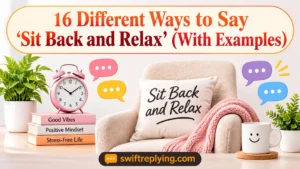
Sometimes, telling someone to sit back and relax is a simple way to encourage them to slow down, stop worrying, and enjoy a moment of peace. However, the right wording can make your message sound more reassuring, friendly, professional, or affectionate, depending on the situation.
Whether you’re comforting a friend, welcoming a guest, communicating with a colleague, or writing a thoughtful message, choosing a suitable alternative can make a difference. Some expressions encourage someone to take a break, while others invite them to enjoy an experience without worrying about the details.
In this guide, you’ll discover 16 different ways to say “sit back and relax,” along with realistic examples, explanations, and practical advice to help you choose the right expression.
16 Synonyms for “Sit Back and Relax”
- Take it easy
- Make yourself comfortable
- Relax and enjoy yourself
- Put your feet up
- Unwind and enjoy
- Let yourself relax
- Take a load off
- Leave the rest to me
- Kick back and relax
- Enjoy some downtime
- Settle in and relax
- Don’t worry about a thing
- Take a breather
- Let go and enjoy the moment
- Rest and recharge
- Sit back and enjoy the ride
What Does “Sit Back and Relax” Mean?
The expression “sit back and relax” means to stop worrying about responsibilities, make yourself comfortable, and enjoy a peaceful or pleasant moment.
It is commonly used when someone wants another person to take a break, stop trying to control everything, or simply enjoy an experience.
The phrase has both a literal and figurative meaning:
- Literal meaning: Sit down, get comfortable, and physically relax.
- Figurative meaning: Stop worrying, let someone else handle the situation, or enjoy something without needing to participate actively.
For example, a host might tell a guest to sit back and relax while they prepare dinner. Similarly, a manager might use the expression to reassure a client that their team is handling a project.
The phrase generally communicates comfort, reassurance, and ease. However, its meaning depends on context. Sometimes it is an invitation to rest, while in other situations, it is a friendly way of saying that someone does not need to worry about the details.
When to Use “Sit Back and Relax”

“Sit back and relax” is a natural expression for situations where someone needs encouragement to slow down or enjoy themselves.
Here are some common situations where it works well:
- With friends: Use it when encouraging a friend to stop worrying and enjoy their free time.
- With family: It can reassure family members that they do not need to help with every little task.
- With your partner: It can sound caring when you want your partner to rest while you take care of something.
- At work: It may be appropriate when reassuring a colleague or client that a task is being handled.
- In hospitality: Hosts, hotel staff, and service providers can use it to make guests feel welcome.
- In entertainment: It works naturally when inviting someone to enjoy a movie, show, journey, or event.
- In social media: It can introduce relaxing activities, vacation pictures, or lifestyle content.
However, the phrase may sound slightly too casual in certain professional situations. If you’re writing a formal email, expressions such as “Please feel free to make yourself comfortable” or “We’ll take care of the arrangements” may communicate the same general intention more appropriately.
Is It Professional or Polite to Say “Sit Back and Relax”?
Yes, “sit back and relax” is generally polite, but its level of professionalism depends on how and where you use it.
The expression is friendly, conversational, and reassuring. It can work well in customer service, presentations, hospitality, and informal workplace conversations.
For example:
“Please sit back and relax while we prepare your presentation materials.”
This sounds welcoming and appropriate in a service-oriented environment.
However, the phrase can occasionally sound too informal or dismissive if someone is discussing a serious concern or asking for assistance. Telling a frustrated colleague to sit back and relax might make them feel that their concerns are not being taken seriously.
For more formal communication, consider:
- “Please allow us to handle the arrangements.”
- “You can leave the remaining details to our team.”
- “Please make yourself comfortable while we take care of everything.”
Communication tip: A polite expression should make the other person feel supported, not ignored. Consider their feelings and the seriousness of the situation before choosing your wording.
1. Take It Easy
“Take it easy” is one of the most natural and widely useful alternatives to “sit back and relax.” It encourages someone to slow down, avoid unnecessary stress, and stop putting too much pressure on themselves.
Unlike the original expression, which often suggests physically getting comfortable, this phrase focuses more on a person’s overall attitude and pace of life. It works particularly well when someone is dealing with a busy schedule, a stressful situation, or a tiring day.
You can use it with friends, family members, colleagues, or anyone who needs a gentle reminder not to overwork themselves. It sounds friendly rather than commanding.
Scenario
Your friend has been working long hours and constantly worrying about unfinished tasks. You want to encourage them to take a break and enjoy their evening.
Examples
- You’ve worked hard all week, so take it easy this weekend.
- Take it easy tonight; there’s no need to finish everything right now.
- You’ve done enough for today. Just take it easy.
- Take it easy and enjoy your vacation without worrying about work.
- Don’t put too much pressure on yourself. Take it easy.
Tone
Friendly, casual, supportive, and reassuring. It sounds natural in everyday conversations and communicates concern without being overly serious.
Explanation
This expression works because it encourages relaxation without necessarily asking someone to sit down. It can refer to physical rest, emotional calm, or simply adopting a less stressful approach to life.
It is slightly broader than “sit back and relax” because it can also mean slowing down or avoiding excessive effort. It is particularly useful when someone needs encouragement rather than instructions.
Best Use
Friendly conversations, supportive text messages, family discussions, and informal workplace communication.
See Also: 13 Different Ways to Say “Sunrise and Sunset” (With Examples)
2. Make Yourself Comfortable
“Make yourself comfortable” is a polite and welcoming alternative that focuses on helping someone feel relaxed in their surroundings. It is especially appropriate when inviting guests into your home, welcoming visitors to an office, or assisting customers in a professional setting.
While “sit back and relax” encourages someone to enjoy a break, this expression specifically invites them to settle into a comfortable position or environment. It creates a sense of hospitality and consideration.
It is also more suitable for formal situations because it sounds respectful without being unnecessarily stiff.
Scenario
A guest arrives at your home after a long journey. You want them to feel welcome while you prepare refreshments.
Examples
- Please come in and make yourself comfortable.
- Make yourself comfortable while I prepare some coffee.
- There’s no need to stand. Please make yourself comfortable.
- Feel free to make yourself comfortable in the living room.
- We’ve prepared everything for your visit, so make yourself comfortable.
Tone
Warm, polite, welcoming, and respectful. It creates a hospitable impression and helps people feel at ease.
Explanation
The main difference is that this phrase focuses on physical and environmental comfort rather than simply taking a break from responsibilities.
It works particularly well when someone is visiting a place or waiting for something. It can replace the original expression when the intention is to make a guest feel welcome.
However, it does not always communicate the idea of letting go of worries or responsibilities.
Best Use
Welcoming guests, customer service, office reception areas, hospitality, and polite everyday conversations.
3. Relax and Enjoy Yourself
“Relax and enjoy yourself” is a cheerful alternative that encourages someone to stop worrying and make the most of an enjoyable experience.
It is particularly useful when someone is attending an event, celebrating a special occasion, going on vacation, or participating in an activity. Rather than focusing only on resting, it encourages the person to appreciate what is happening around them.
This expression is slightly more enthusiastic than “sit back and relax.” It suggests that someone should not spend their time worrying about minor details when they could be enjoying themselves.
Scenario
Your family is attending a birthday celebration, but one of your relatives keeps worrying about the arrangements. You want them to enjoy the occasion instead of focusing on the preparations.
Examples
- Everything is ready for the party, so relax and enjoy yourself.
- You’ve planned this trip for months. Relax and enjoy yourself.
- Don’t worry about the schedule; just relax and enjoy yourself.
- We’re taking care of the arrangements. Relax and enjoy yourself.
- It’s your special day, so relax and enjoy yourself.
Tone
Cheerful, friendly, encouraging, and positive. It communicates enthusiasm and makes the other person feel free to enjoy an experience.
Explanation
This phrase is useful because it combines two ideas: becoming comfortable and enjoying an activity.
Unlike “sit back and relax,” it does not necessarily suggest doing nothing. Someone can use it at a wedding, party, concert, or holiday where active participation is part of the experience.
It is a natural choice when the goal is to encourage enjoyment rather than simply rest.
Best Use
Parties, vacations, celebrations, social gatherings, and friendly messages.
4. Put Your Feet Up
“Put your feet up” is an informal expression that means to sit comfortably and take a well-deserved rest. It often suggests that someone has been working hard and deserves some time away from their responsibilities.
This expression is slightly more specific than the original phrase because it emphasizes physical rest. It creates an image of someone relaxing at home, perhaps on a sofa or comfortable chair.
It is particularly natural when speaking to someone who has had a tiring day, completed a demanding task, or spent a long time working.
Scenario
Your partner has spent the entire afternoon cleaning the house. You want them to stop working while you handle the remaining chores.
Examples
- You’ve been cleaning all afternoon. Put your feet up for a while.
- Dinner is almost ready, so put your feet up and relax.
- You deserve a break after such a busy week. Put your feet up.
- Let me handle the shopping while you put your feet up.
- You’ve finished all your tasks. Now it’s time to put your feet up.
Tone
Casual, caring, affectionate, and comforting. It sounds especially natural among friends and family members.
Explanation
This expression works as an alternative because it communicates the idea of resting after physical or mental effort.
However, it is not suitable for every situation. It generally implies sitting down and taking a break, rather than enjoying an event or letting someone else manage a complicated situation.
It is also more conversational than formal.
Best Use
Conversations with family, partners, friends, and people who need a break after working hard.
See Also: IMSG Meaning on Instagram: What Does IMSG Mean in Texting?
5. Unwind and Enjoy
“Unwind and enjoy” is a relaxed, expressive alternative that encourages someone to release tension and appreciate their free time.
The word “unwind” suggests gradually becoming less stressed after dealing with responsibilities or pressure. Adding “enjoy” makes the expression more positive by directing attention toward the pleasant experience ahead.
It works particularly well in travel descriptions, wellness content, invitations, and messages about leisure activities. Compared with “sit back and relax,” it sounds slightly more polished and focuses on emotional relaxation as well as physical comfort.
Scenario
You’re inviting a friend to spend the weekend at a peaceful countryside resort after a demanding month at work.
Examples
- Spend the weekend here, unwind and enjoy the peaceful surroundings.
- You’ve had a stressful month, so take some time to unwind and enjoy.
- Leave your work worries behind and unwind and enjoy your vacation.
- Join us for an evening of good food, music, and time to unwind and enjoy.
- Take a break from your routine, unwind and enjoy the little things.
Tone
Calm, inviting, positive, and soothing. It creates an atmosphere of comfort and leisure.
Explanation
This alternative is especially useful when you want to emphasize relief from stress. “Sit back and relax” can simply mean becoming comfortable, whereas “unwind and enjoy” suggests moving away from tension and appreciating a peaceful experience.
It works naturally in promotional writing and casual invitations. However, it is less suitable when you specifically want someone to stop worrying about a task that you are handling for them.
Best Use
Vacation invitations, wellness content, leisure activities, lifestyle writing, and friendly messages about taking a break.
6. Let Yourself Relax
“Let yourself relax” is a gentle expression that encourages someone to stop resisting rest and give themselves permission to slow down.
It is particularly appropriate for people who struggle to take breaks, feel guilty about resting, or constantly think about their responsibilities. The phrase focuses on the person’s willingness to relax rather than simply telling them what to do.
Compared with the original expression, it sounds more emotionally supportive and thoughtful. It acknowledges that relaxing is sometimes a choice people find difficult to make.
Scenario
A family member has completed an important project but continues worrying about minor details. You want to remind them that they deserve some peace.
Examples
- Everything is finished now. Let yourself relax.
- You’ve been worrying all day, so let yourself relax tonight.
- There’s nothing else you need to do. Let yourself relax.
- Take a few deep breaths and let yourself relax.
- You’ve earned this time off, so let yourself relax and enjoy it.
Tone
Gentle, caring, supportive, and reassuring. It is particularly effective when someone needs emotional encouragement.
Explanation
This phrase works because it addresses the emotional side of relaxation. Rather than simply inviting someone to sit down, it encourages them to stop feeling responsible for everything.
It can be especially meaningful when speaking to someone who is overwhelmed or struggling to switch off mentally.
However, it may sound slightly personal or advisory in a formal professional conversation.
Best Use
Supportive conversations, personal messages, family discussions, and situations involving stress or emotional pressure.
7. Take a Load Off
“Take a load off” is an informal expression that encourages someone to sit down, rest, and relieve themselves of physical or mental pressure.
It is often used when someone arrives after a long journey, finishes a demanding task, or has been standing for an extended period.
Unlike “sit back and relax,” this phrase has a particularly conversational and friendly feel. It can also suggest that someone should stop carrying unnecessary responsibilities for a while.
It is most natural in casual conversations, especially when offering someone a comfortable place to sit.
Scenario
A friend visits your home after a long day of traveling. You want to invite them to sit down while you prepare something to eat.
Examples
- Come inside and take a load off.
- You’ve been on your feet all day. Take a load off.
- Take a load off while I finish preparing dinner.
- There’s a comfortable chair over there. Go ahead and take a load off.
- You’ve done enough work today. Take a load off and enjoy the evening.
Tone
Casual, friendly, welcoming, and relaxed. It sounds natural in informal conversations.
Explanation
The phrase is useful because it communicates relief from effort or tiredness. It can refer to taking physical weight off your feet or temporarily relieving yourself of stress.
However, it is more informal than “sit back and relax.” It may not be the right choice for a formal business email or a conversation with someone you do not know well.
Best Use
Casual invitations, conversations with friends, family gatherings, and situations where someone needs physical rest.
See Also: 200+ Best Responses to “Welcome Aboard”
8. Leave the Rest to Me
“Leave the rest to me” is a reassuring alternative when you want someone to stop worrying because you are taking responsibility for what remains.
Unlike the original expression, this phrase is not simply about physical relaxation. It communicates that someone else will handle the remaining work, arrangements, or responsibilities.
It is particularly useful when helping a friend, supporting a partner, managing an event, or reassuring a colleague. It can make someone feel supported because it offers practical assistance rather than just encouraging them to relax.
Scenario
Your colleague has completed most of the preparations for an important meeting but is worried about the remaining arrangements. You offer to handle the final tasks.
Examples
- You’ve completed the presentation. Leave the rest to me.
- Don’t worry about setting the table. Leave the rest to me.
- Enjoy your evening; I’ll handle the remaining arrangements.
- You’ve done enough for today. Leave the rest to me.
- Just focus on your guests and leave the rest to me.
Tone
Reassuring, supportive, confident, and helpful. It communicates responsibility and dependability.
Explanation
This expression is a contextual alternative rather than a direct synonym. It works when the reason someone needs to relax is that another person is willing to take care of outstanding tasks.
It is especially effective because it combines reassurance with a clear offer of help.
However, only use it when you genuinely intend to handle the remaining responsibilities.
Best Use
Workplace teamwork, family responsibilities, event planning, personal assistance, and reassuring messages.
9. Kick Back and Relax
“Kick back and relax” is a very casual expression that means to sit comfortably, forget about your responsibilities for a while, and enjoy some free time.
It has a laid-back, informal feeling and is often associated with watching television, listening to music, spending time with friends, or enjoying a quiet evening at home.
The phrase is more playful than “sit back and relax.” It is particularly suitable when speaking to people you know well or describing an informal leisure activity.
Scenario
Your friend has finished a busy week and wants to spend Saturday evening at home without making any plans.
Examples
- Grab some snacks, kick back and relax.
- You’ve had a long week, so kick back and relax tonight.
- Put on your favorite music and kick back and relax.
- There’s nothing planned for this afternoon. Just kick back and relax.
- We finally have a free weekend to kick back and relax.
Tone
Laid-back, casual, friendly, and informal. It creates an easygoing atmosphere.
Explanation
This phrase is a close alternative because it communicates both physical comfort and a relaxed attitude.
Its main difference is its informal style. It sounds more conversational and playful than the original phrase, making it ideal for casual settings.
It would generally be unsuitable for formal correspondence, serious workplace discussions, or situations requiring respectful professional language.
Best Use
Text messages, friendly conversations, casual invitations, social media captions, and descriptions of leisure time.
See Also: 200+ Best Responses to When Someone Says “Reply Me”
10. Enjoy Some Downtime
“Enjoy some downtime” is a polished expression that encourages someone to take a break from their usual activities and spend time resting.
The term “downtime” refers to a period when someone is free from work, responsibilities, or regular demands. It is commonly used in professional and personal conversations.
Unlike “sit back and relax,” this phrase focuses on having a period of rest rather than the specific action of sitting comfortably.
It is a useful choice when speaking about work-life balance, holidays, weekends, or recovery after a demanding schedule.
Scenario
A manager notices that a team has been working on a demanding project for several weeks. They encourage everyone to enjoy their time off after completing it.
Examples
- You’ve all worked hard, so enjoy some downtime this weekend.
- Take the afternoon off and enjoy some downtime.
- After the conference, I plan to enjoy some downtime.
- Everyone deserves some downtime after such a busy month.
- Use your vacation to enjoy some downtime away from work.
Tone
Calm, professional, considerate, and friendly. It works in both workplace and personal communication.
Explanation
This expression is particularly effective when discussing scheduled breaks or periods of rest.
It differs from the original because it describes the time available for relaxation rather than directly inviting someone to sit down.
It also sounds slightly more professional than expressions such as “kick back and relax” or “take a load off.”
Best Use
Workplace communication, vacation messages, professional conversations, and discussions about maintaining a healthy work-life balance.
11. Settle In and Relax
“Settle in and relax” is a welcoming expression that encourages someone to get comfortable and enjoy their surroundings.
It is especially useful when someone has just arrived at a new place, such as a home, hotel, office, or holiday accommodation.
The phrase suggests taking a little time to become comfortable before beginning an activity or enjoying the experience. Compared with “sit back and relax,” it places greater emphasis on arriving, getting settled, and feeling at ease.
Scenario
A friend arrives at your home for a weekend visit. You want them to unpack, get comfortable, and feel at home.
Examples
- Welcome! Settle in and relax while I prepare some refreshments.
- You’ve had a long journey, so settle in and relax.
- Make yourself at home, settle in and relax.
- Your room is ready, so settle in and relax before dinner.
- Take your time, settle in and relax. There’s no rush.
Tone
Welcoming, gentle, friendly, and hospitable. It makes people feel comfortable in an unfamiliar environment.
Explanation
This phrase works particularly well when someone needs time to adjust to their surroundings.
Unlike “sit back and relax,” it suggests a small process: arriving, becoming comfortable, and then enjoying the moment.
It is not necessarily about escaping responsibilities or handing tasks over to someone else.
Best Use
Welcoming guests, hotel communication, travel accommodation, office reception, and friendly invitations.
12. Don’t Worry About a Thing
“Don’t worry about a thing” is a reassuring expression used when someone is concerned about a situation and you want them to feel more comfortable.
It is particularly effective when someone is anxious about arrangements, responsibilities, or possible problems.
Unlike the original phrase, this alternative focuses primarily on emotional reassurance rather than physical rest. It tells the other person that there is no need to remain concerned.
It can sound warm and supportive when used sincerely, especially when followed by an explanation of how the situation will be handled.
Scenario
Your friend is visiting your home but keeps worrying about whether they need to bring food or help with preparations. You want them to enjoy the visit without feeling responsible for anything.
Examples
- Don’t worry about a thing. I’ve already arranged everything.
- Your booking is confirmed, so don’t worry about a thing.
- Just enjoy the evening and don’t worry about a thing.
- I’ve taken care of the details, so don’t worry about a thing.
- Everything is under control. Don’t worry about a thing.
Tone
Reassuring, caring, friendly, and comforting. It can create a sense of trust and security.
Explanation
This expression is useful when someone’s inability to relax comes from worrying about something.
It is not an exact replacement in every situation. For example, someone enjoying a peaceful afternoon may not need reassurance about anything.
It works best when there is an actual concern that you can reasonably help address.
Best Use
Supportive conversations, customer service, travel arrangements, family messages, and situations where someone needs reassurance.
13. Take a Breather
“Take a breather” is an informal expression that means pausing an activity for a short time to rest and regain energy.
It is especially appropriate when someone has been working continuously, dealing with pressure, or handling several demanding tasks.
Unlike “sit back and relax,” which can suggest enjoying a longer period of leisure, this phrase usually refers to a shorter break.
It can also suggest stepping away from a stressful situation before returning with a clearer mind.
Scenario
A colleague has been working on a difficult report for several hours and is becoming frustrated. You encourage them to pause before continuing.
Examples
- You’ve been staring at that screen for hours. Take a breather.
- Let’s take a breather before we continue the discussion.
- You’ve done a lot today. Take a breather and come back refreshed.
- Take a breather, grab some water, and then we’ll finish the task.
- Everyone needs to take a breather after a demanding meeting.
Tone
Friendly, supportive, practical, and casual. It is suitable for both personal and informal professional conversations.
Explanation
This phrase is a contextual alternative because it focuses on a temporary pause rather than complete relaxation.
It works well when someone needs a moment to recover physically or mentally. It is also useful in workplace environments because it acknowledges that people sometimes need short breaks to manage pressure.
However, it does not necessarily suggest enjoying an extended period of free time.
Best Use
Short workplace breaks, study sessions, stressful discussions, busy schedules, and everyday conversations.
See Also: SMH Meaning in Text: What Does SMH Mean in Texting and Social Media?
14. Let Go and Enjoy the Moment
“Let go and enjoy the moment” is an expressive alternative that encourages someone to stop overthinking and appreciate what is happening right now.
It is particularly useful when someone is struggling to enjoy an experience because they are too focused on expectations, worries, or future responsibilities.
Compared with “sit back and relax,” this phrase has a stronger emotional meaning. It encourages someone to become mentally present instead of simply resting.
It works well in conversations about celebrations, travel, relationships, and memorable experiences.
Scenario
Your friend is attending a special celebration but keeps worrying about whether everything is going according to plan. You encourage them to appreciate the occasion instead.
Examples
- You’ve planned everything carefully. Now let go and enjoy the moment.
- Stop worrying about the photographs and let go and enjoy the moment.
- We’re finally on vacation, so let go and enjoy the moment.
- Not everything needs to be perfect. Let go and enjoy the moment.
- Put your worries aside and let go and enjoy the moment.
Tone
Encouraging, thoughtful, expressive, and uplifting. It creates a positive and emotionally supportive impression.
Explanation
This expression is useful when the real problem is overthinking rather than physical tiredness.
It encourages mindfulness and appreciation of the present experience. However, it is more reflective than the original phrase and may sound overly expressive in a straightforward workplace conversation.
Choose it when you want someone to focus less on controlling every detail and more on appreciating the experience.
Best Use
Special occasions, vacations, personal conversations, celebrations, and encouraging messages.
15. Rest and Recharge
“Rest and recharge” is a thoughtful alternative that emphasizes recovering energy after a demanding period.
It suggests taking enough time away from responsibilities to regain physical or mental strength.
This expression is particularly useful in professional communication because it sounds more purposeful than simply telling someone to relax. It is often appropriate when discussing annual leave, weekends, recovery time, or breaks after completing a major project.
Unlike “sit back and relax,” it focuses on the benefit of resting rather than the immediate experience of comfort.
Scenario
Your team has just completed a demanding project. You want to encourage everyone to take some time off before starting the next assignment.
Examples
- You’ve worked incredibly hard. Take the weekend to rest and recharge.
- Enjoy your annual leave and come back refreshed.
- Everyone deserves time to rest and recharge after a busy month.
- Put work aside for a while and focus on resting and recharging.
- Take a few days off to rest and recharge before your next project.
Tone
Supportive, considerate, professional, and encouraging. It communicates concern for someone’s well-being without sounding overly personal.
Explanation
This expression works well when relaxation is intended to restore energy and improve well-being.
It differs from “sit back and relax” because it suggests a purpose behind taking a break: recovering from physical or mental demands.
It is also suitable for professional communication because it sounds constructive and respectful.
Best Use
Workplace emails, vacation messages, team communication, personal wellness discussions, and conversations about recovering from a busy schedule.
16. Sit Back and Enjoy the Ride
“Sit back and enjoy the ride” is an expressive alternative that encourages someone to stop worrying about every detail and enjoy an experience as it unfolds.
It is particularly suitable when someone is participating in a journey, following a process, or experiencing something exciting without needing to control every step.
Unlike “sit back and relax,” this expression has a stronger sense of anticipation and enjoyment. It suggests trusting the process and appreciating what happens along the way.
It can be used literally during travel or figuratively when describing an exciting project, new opportunity, or unexpected adventure.
Scenario
Your friend is nervous about an upcoming road trip because they have not planned every detail. You want them to relax and enjoy the journey.
Examples
- We’ve planned the route, so sit back and enjoy the ride.
- Don’t worry about every little detail. Sit back and enjoy the ride.
- The adventure is just beginning, so sit back and enjoy the ride.
- Everything is arranged for the trip. Sit back and enjoy the ride.
- You’ve done your part, so sit back and enjoy the ride.
Tone
Optimistic, friendly, encouraging, and adventurous. It creates a sense of excitement and confidence.
Explanation
This phrase is a contextual alternative rather than a direct synonym. It works when someone needs encouragement to enjoy an experience instead of worrying about how everything will happen.
The word “ride” can refer to an actual journey or the figurative experience of going through a process.
It is less suitable when someone simply needs to rest after physical exhaustion.
Best Use
Travel conversations, exciting projects, new experiences, friendly messages, and situations where someone needs encouragement to trust the process.
Frequently Asked Questions
1. What is the best alternative to “sit back and relax”?
“Take it easy” is one of the most versatile alternatives. It works in everyday conversations, friendly messages, and informal professional settings.
However, the best choice depends on your intention. Use “make yourself comfortable” when welcoming guests, “put your feet up” when encouraging someone to rest, and “leave the rest to me” when offering practical help.
2. Which alternative sounds more professional?
“Enjoy some downtime” and “rest and recharge” are suitable professional alternatives.
For example:
“After completing this project, I hope you get some time to rest and recharge.”
If you are reassuring a client that your team is handling the arrangements, you could say:
“Please feel free to relax while our team takes care of the remaining details.”
These expressions sound more considerate in professional communication than highly casual alternatives such as “kick back and relax.”
3. Which alternative is best for texting?
For casual text messages, “Take it easy,” “kick back and relax,” and “put your feet up” are natural choices.
For example:
“Enjoy your evening! You’ve had a long week, so put your feet up and relax.”
These expressions sound friendly without making the message feel unnecessarily formal.
Conclusion
Choosing another way to say “sit back and relax” depends on what you want your message to communicate. Some alternatives, such as “take it easy” and “put your feet up,” work naturally in casual conversations. Others, including “enjoy some downtime” and “rest and recharge,” are better suited to professional settings.
If you want to make someone feel welcome, “make yourself comfortable” is a thoughtful choice. If you want to reassure someone that you will handle their responsibilities, “leave the rest to me” communicates that intention more clearly. The most important thing is to consider your relationship with the listener and the situation. Choose words that feel genuine, considerate, and natural, and your message will make a much better impression.

Mafia Mukhtar is a passionate communication writer with multiple years of experience exploring thoughtful responses, everyday expressions, and effective ways to communicate. At SwiftReplying.com, she shares practical response ideas and helpful examples to make conversations easier, more natural, and more meaningful. Her goal is to help readers find the right words for every situation. Explore SwiftReplying.com for fresh inspiration and smarter ways to reply!









1 thought on “16 Different Ways to Say ‘Sit Back and Relax’ (With Examples)”