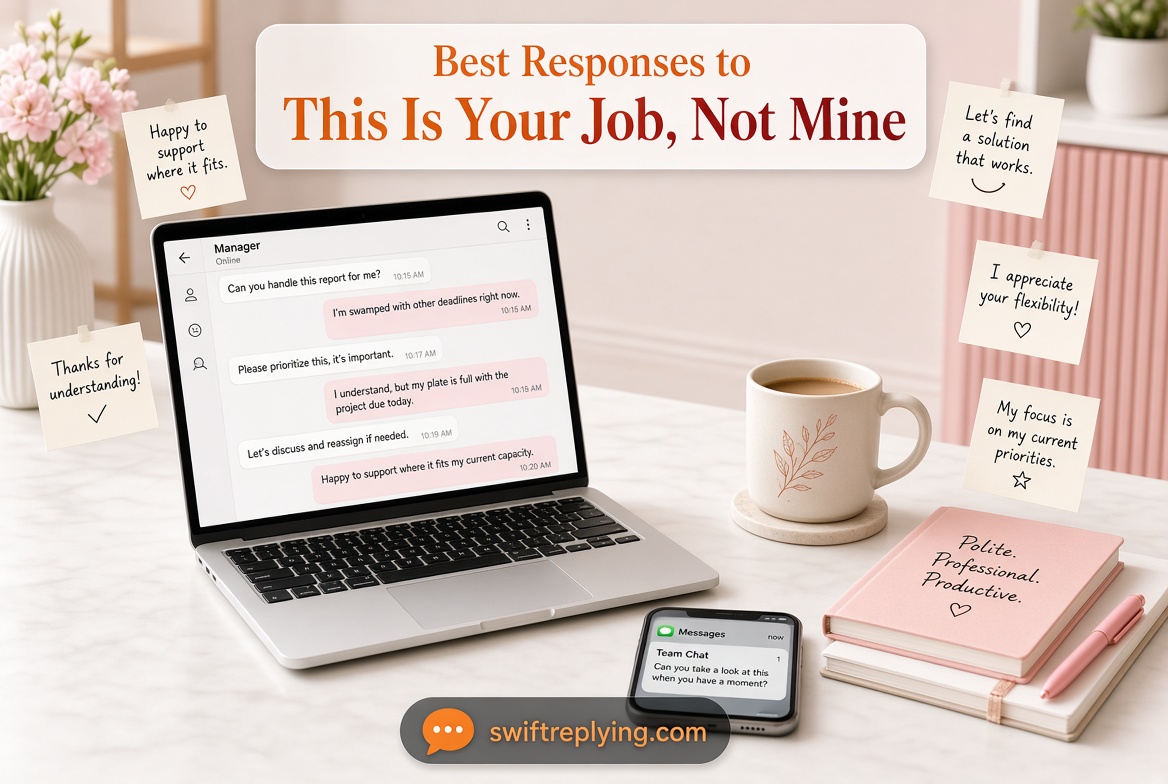
When someone says This Is Your Job Not Mine, the conversation can quickly become frustrating or dismissive. Knowing the right words helps you give a calm reply without creating unnecessary tension.
These best responses help you remain clear, confident, and respectful during difficult workplace moments. They also help protect your time while maintaining positive work relationships.
A thoughtful professional comeback can encourage respectful conversation and clarify responsibility without sounding confrontational. Whether you need a polite workplace response or confident reply, context matters greatly.
Understanding task ownership, workplace boundaries, and accountability at work makes responses more effective. With the right professional phrasing, you can calmly redirect tasks and maintain strong professional relationships.
Quick Answer
The best response to “This is your job, not mine” is calm, direct, and focused on solving the problem. You can say, “I understand, but I need your help with this part,” or “Let’s clarify who is responsible so we can move forward.” Choose a polite response at work, a firm response when someone is being rude, or a light response when the situation is casual.
How to Use These “This Is Your Job, Not Mine” Responses
Choose your response based on the situation and the person speaking to you. At work, stay professional and focus on duties, teamwork, and clear roles. If someone is being disrespectful, remain calm instead of matching their attitude. For friends or casual conversations, a little humor can keep things relaxed. The goal is not to win an argument, but to communicate clearly and protect your boundaries.
Professional Responses to “This Is Your Job, Not Mine”
- “I understand, but teamwork may help us finish this task more efficiently.”
- “Thanks for clarifying. Let’s confirm who should handle this part.”
- “I respect your role, but I need some support with this task.”
- “That may be true, but solving it together could save everyone time.”
- “Let’s check our responsibilities before deciding who should handle this.”
- “I understand your point. Can we discuss the best way forward?”
- “I appreciate the clarification, but this issue still needs attention.”
- “Let’s focus on solving the problem rather than assigning blame.”
- “I hear you, but cooperation would make this much easier.”
- “Let’s clarify the task so there is no confusion about responsibility.”
Polite Replies to “This Is Your Job, Not Mine”
- “I understand, and I would appreciate your help this time.”
- “That’s fair, but could you please point me toward the right person?”
- “Thanks for letting me know. I’ll handle my part from here.”
- “I understand your role, and I hope you understand my concern.”
- “No problem. Let’s make sure this reaches the correct person.”
- “I appreciate the clarification. I’ll check who is responsible.”
- “That makes sense. Could you help me understand the next step?”
- “I understand, but your guidance would still be helpful.”
- “Thanks for explaining. I’ll make sure the right person handles it.”
- “Fair enough. I just wanted to make sure nothing was missed.”
Calm Responses to “This Is Your Job, Not Mine”
- “I understand. Let’s stay calm and figure out the next step.”
- “That’s okay. I’m simply trying to get this issue resolved.”
- “I hear you. Let’s focus on finding a simple solution.”
- “No worries. I just wanted to make sure everything gets handled.”
- “I understand your position, and I’ll work from there.”
- “That’s clear. I appreciate you explaining your side.”
- “Okay, let’s avoid confusion and focus on what needs doing.”
- “I understand. We can keep this simple and move forward.”
- “Thanks for being clear. I’ll take the next appropriate step.”
- “That’s fine. I’m only interested in getting the matter resolved.”
Firm Responses to “This Is Your Job, Not Mine”
- “I understand, but speaking respectfully is important in any situation.”
- “I know my responsibilities, and I’m asking for reasonable cooperation.”
- “That may be your view, but the issue still needs attention.”
- “I respect your boundaries, and I expect the same in return.”
- “I’m handling my responsibility, but this part requires your involvement.”
- “Let’s be clear about responsibilities without making this personal.”
- “I’m not asking you to do everything, only what is necessary.”
- “I understand your role, but dismissing the issue will not help.”
- “We can disagree, but we still need to communicate respectfully.”
- “I’m confident about my duties, and I need clarity from you.”
Workplace Responses to “This Is Your Job, Not Mine”
- “Let’s review the team roles so everyone understands their responsibilities.”
- “I want to avoid confusion, so let’s confirm who owns this task.”
- “Could we check the work plan before deciding who handles it?”
- “I’m happy to handle my duties, but I need role clarity.”
- “Let’s make sure this task is assigned to the right person.”
- “I understand your workload, but this still needs someone responsible.”
- “A quick discussion could help us avoid this issue next time.”
- “Let’s keep communication clear so the team can work smoothly.”
- “I want to help, but I also need clear expectations.”
- “Let’s agree on responsibilities so this does not happen again.”
Confident Responses to “This Is Your Job, Not Mine”
- “I know what my job requires, and I also know when help matters.”
- “I’m comfortable handling my work, but I value useful teamwork.”
- “I understand my role, and I’m asking for cooperation.”
- “Confidence means knowing when to handle something and when to ask.”
- “I can handle my responsibilities without accepting unnecessary disrespect.”
- “I’m clear about my duties, so let’s keep this conversation productive.”
- “I respect your answer, but I still expect professional communication.”
- “I’m not confused about my role. I’m looking for a solution.”
- “I know where my responsibility starts, and where yours may help.”
- “I’m confident enough to ask for support when circumstances require it.”
Smart Responses to “This Is Your Job, Not Mine”
- “Perhaps, but solving problems works better than simply pointing fingers.”
- “You may be right, but cooperation can still make things easier.”
- “Knowing whose job it is does not solve the problem.”
- “Fair point. Now let’s figure out who can actually resolve it.”
- “Responsibilities matter, but so does helping the team succeed.”
- “That’s one way to see it, but solutions need cooperation.”
- “I understand the distinction, but the problem remains either way.”
- “Maybe it is my job, but teamwork can still be useful.”
- “Good point. Let’s focus on what needs to happen next.”
- “I hear you. Now let’s find the person who can help.”
Short Responses to “This Is Your Job, Not Mine”
- “I understand. I’ll handle my responsibility.”
- “Fair enough. Let’s keep moving.”
- “Got it. I’ll take care of it.”
- “Understood. I’ll find another solution.”
- “Okay, thanks for clarifying.”
- “No problem. I’ll handle my part.”
- “I hear you. Let’s move forward.”
- “Fair point. I’ll take it from here.”
- “Understood. I’ll contact the right person.”
- “Thanks. I know what to do now.”
Respectful Comebacks to “This Is Your Job, Not Mine”
- “You are right about the role, but kindness would still help.”
- “I respect your position, so please respect my request too.”
- “That’s understood. I simply hoped we could work together.”
- “I appreciate your honesty, even though I needed another answer.”
- “Fair enough. I’ll respect your boundary and handle this differently.”
- “I understand, and I hope we can keep things respectful.”
- “That’s clear. Let’s make sure neither of us misunderstands expectations.”
- “I accept that, but respectful communication should always remain important.”
- “Thanks for explaining. I’ll take the appropriate next step.”
- “I understand your point, and I appreciate the clarification.”
See Also: 200+ Best Responses to “See You Later”
Funny Responses to “This Is Your Job, Not Mine”
- “True, but teamwork never hurt anyone, especially before lunchtime. 😄”
- “Fair enough, I’ll add it to my very long adventure list.”
- “Got it. I was just checking whether teamwork still existed today. 😂”
- “No worries, I’ll call the Department of Unexpected Responsibilities.”
- “Fair point. I promise not to steal your job anytime soon.”
- “Understood. I’ll return this task to its mysterious owner. 😅”
- “Okay, I’ll stop trying to recruit you for unpaid teamwork.”
- “Noted. Your job remains safely protected from my ambitious plans.”
- “Fair enough. I guess my job just found another surprise.”
- “Gotcha. I’ll save your heroic assistance for another day. 😄”
Sarcastic Responses to “This Is Your Job, Not Mine”
- “Thanks for the reminder. I nearly forgot what my job description said.”
- “Absolutely, because apparently teamwork has officially left the building.”
- “Good to know. I’ll make sure nobody accidentally asks you again.”
- “Thanks, Captain Responsibility. I’ll handle the mission myself.”
- “Understood. I’ll stop expecting cooperation from the cooperation department.”
- “Right, because helping solve problems would clearly be too dangerous.”
- “Thanks for clearing that up. My expectations are officially adjusted.”
- “Noted. I’ll make sure your job remains comfortably untouched.”
- “Of course. Heaven forbid we actually help each other.”
- “Got it. I’ll remember that teamwork apparently has office hours.”
Responses to a Coworker Saying “This Is Your Job, Not Mine”
- “I understand, but could you help me identify the correct person?”
- “That’s fine. Let’s confirm the task owner so nothing gets delayed.”
- “I respect that. Can you direct me to someone who handles it?”
- “Understood. I’ll take care of my part and follow up.”
- “Thanks for clarifying. I’ll check our team responsibilities.”
- “I understand, but your input could help prevent a mistake.”
- “No problem. Let’s make sure the task reaches the right person.”
- “Fair enough. I’ll handle this through the proper team member.”
- “Thanks. I appreciate knowing where your responsibility ends.”
- “I understand. Let’s keep communication clear between everyone involved.”
Responses to a Boss Saying “This Is Your Job, Not Mine”
- “Understood. I’ll take ownership and keep you updated on progress.”
- “I understand. I’ll handle the task and ask if guidance becomes necessary.”
- “Got it. I’ll take care of this within my responsibilities.”
- “Understood. I’ll make sure the task is completed properly.”
- “Thanks for clarifying. I’ll take responsibility and move forward.”
- “I understand. I’ll prioritize this and keep the work on track.”
- “Understood. I’ll manage it and report back when finished.”
- “That makes sense. I’ll handle the responsibility assigned to me.”
- “Got it. I’ll take ownership and address the issue promptly.”
- “Understood. I’ll focus on completing the task as expected.”
Responses When Someone Avoids Responsibility
- “I understand, but someone still needs to take responsibility here.”
- “Let’s identify the correct person instead of leaving the issue unresolved.”
- “I respect your answer, but avoiding the problem will not help.”
- “If it is not your task, who should handle it?”
- “That’s fine, but we need a clear owner for this.”
- “I understand. Let’s find someone who can take responsibility.”
- “Pointing out what is not yours does not solve anything.”
- “Let’s focus on assigning the task instead of passing it around.”
- “Someone needs to step in before this becomes a bigger problem.”
- “I agree responsibilities matter, so let’s assign this correctly.”
Assertive Responses About Job Responsibilities
- “I understand my duties, and I expect everyone to understand theirs.”
- “Clear responsibilities help everyone work better and avoid confusion.”
- “I’m willing to do my part, but I cannot do everyone’s.”
- “Let’s respect each person’s role and communicate when help is needed.”
- “I take responsibility seriously, and I expect clear boundaries.”
- “I’m happy to cooperate, but responsibilities should remain fair.”
- “We can support each other without taking over another person’s job.”
- “Let’s keep expectations clear so everyone knows what belongs to them.”
- “I respect your workload, but my workload matters too.”
- “Good teamwork starts with clear duties and mutual respect.”
Diplomatic Responses to “This Is Your Job, Not Mine”
- “I understand your concern. Let’s find a solution that works.”
- “That’s fair. Perhaps we can clarify the task together.”
- “I see your point, and I’d like to avoid confusion.”
- “I respect your position. Let’s decide what should happen next.”
- “Thanks for explaining. I hope we can resolve this smoothly.”
- “I understand. Let’s keep the conversation focused on the solution.”
- “That makes sense. Could we agree on who handles this?”
- “I appreciate your honesty. Let’s make sure nothing gets overlooked.”
- “I understand your role, and I want to respect it.”
- “Let’s work through this calmly and choose the right person.”
Responses When Someone Sounds Rude
- “I understand your point, but there is no need to be rude.”
- “You can explain your position without speaking disrespectfully.”
- “I’m willing to listen if we can keep this respectful.”
- “I understand the message, but the tone could be kinder.”
- “We can discuss responsibilities without turning this into an argument.”
- “I respect your answer, but I expect respectful communication.”
- “There is no need for tension. Let’s simply clarify the issue.”
- “I’m happy to talk when we can speak calmly.”
- “Your point is clear. Let’s keep the conversation professional.”
- “I understand what you mean, but respect should go both ways.”
Responses That Set Clear Boundaries
- “I will handle my responsibilities, but I will not accept disrespect.”
- “I’m happy to help when the request is reasonable and respectful.”
- “I understand your boundary, and I have boundaries as well.”
- “I can support you without taking responsibility for your entire task.”
- “Let’s respect each other’s roles and avoid crossing boundaries.”
- “I’m willing to cooperate, but I need clear limits.”
- “I can help with part of this, but not everything.”
- “I respect your time, and I expect mine to be respected.”
- “Helping is different from taking over someone else’s responsibility.”
- “I’m happy to work together when expectations remain fair.”
Responses for Teamwork and Cooperation
- “We may have different duties, but we can still support each other.”
- “Working together can help us finish this faster and better.”
- “Teamwork means helping when circumstances call for extra support.”
- “Let’s combine our efforts and get this problem solved.”
- “I respect your role, and I hope we can cooperate.”
- “A little teamwork can prevent a small issue from becoming bigger.”
- “Let’s focus on the shared goal instead of separate responsibilities.”
- “We all have different jobs, but success depends on cooperation.”
- “I’m willing to help you when you need support too.”
- “Good teamwork makes difficult tasks easier for everyone involved.”
Responses When You Need Help
- “I understand this is my responsibility, but I need some assistance.”
- “Could you please help me with this part for a moment?”
- “I can handle the task, but your guidance would help.”
- “I’m asking for support, not asking you to do everything.”
- “Could you point me toward the best way to handle this?”
- “I would appreciate a little help while I work through this.”
- “I understand my role, but this situation needs extra support.”
- “Can you help me solve this without taking over?”
- “Your experience could help me complete this correctly.”
- “I’m responsible for the task, but I could use your advice.”
Clever Responses to “This Is Your Job, Not Mine”
- “Knowing the job is mine does not mean I cannot ask.”
- “True, but solving problems often takes more than one person.”
- “I agree. Now let’s make sure the right person can help.”
- “Fair point, but good communication still makes every job easier.”
- “You are correct, but cooperation is never a bad skill.”
- “I know it is my task. I’m simply looking for support.”
- “Responsibilities can be separate while solutions can still be shared.”
- “I understand. Let’s focus on fixing the issue instead.”
- “That is clear. Now let’s find the smartest next step.”
- “You made your point. Let’s make sure the problem gets solved.”
Text Responses to “This Is Your Job, Not Mine”
- “I know, but I thought you could help me for a moment.”
- “Fair enough. I’ll figure out another way to handle it.”
- “Got it. I just wanted some quick help.”
- “Okay, I understand. I’ll contact the right person.”
- “No worries. Thanks for making your position clear.”
- “I hear you. Let’s leave it there and move forward.”
- “That’s fair. I’ll take care of my responsibility.”
- “Understood. I’ll find someone whose role includes this.”
- “Thanks for clarifying. I know what step to take now.”
- “Okay, no problem. I’ll handle it from here.”
Strong but Respectful Comebacks
- “I know my job, but I also know how to ask for help.”
- “I respect your role, so please do not dismiss my request.”
- “I’m not asking you to own my work, only support it.”
- “You can say no without making the conversation disrespectful.”
- “I accept your answer, but your tone is unnecessary.”
- “I can handle my responsibilities without being spoken down to.”
- “Let’s keep this professional and avoid turning it personal.”
- “I understand your limits, and I expect you to respect mine.”
- “We can disagree about duties without disrespecting each other.”
- “I’m responsible for my work, not for your attitude.”
Friendly Responses to “This Is Your Job, Not Mine”
- “Fair enough! I just thought you might lend me a hand.”
- “No worries, I’ll handle it. Thanks for being honest. 😊”
- “That’s okay. I’ll find someone who can help.”
- “Totally fair. I was only asking for a little support.”
- “All good. I understand where you’re coming from.”
- “No problem! I’ll take care of it myself.”
- “Fair point. I appreciate you clearing that up.”
- “That’s fine. We’re still good.”
- “Got it! I’ll sort it out from here. 👍”
- “No worries. Thanks for letting me know.”
When “This Is Your Job, Not Mine” Becomes Personal
- “Let’s keep personal feelings out of a simple work responsibility.”
- “This does not need to become personal. Let’s focus on the task.”
- “I’m discussing the work, not criticizing you personally.”
- “We can disagree about responsibilities without attacking each other.”
- “Let’s separate the task from our personal feelings.”
- “I want to solve the issue, not create tension between us.”
- “There is no reason for this conversation to become personal.”
- “I respect you, even when we disagree about responsibilities.”
- “Let’s take a step back and discuss this calmly.”
- “The goal is solving the problem, not creating a personal conflict.”
FAQs
What Are the Best Responses to “This Is Your Job, Not Mine”?
The best responses stay calm, clear, and professional while addressing responsibility. A confident reply can clarify task ownership without creating unnecessary workplace conflict.
How Can I Give a Professional Response Without Sounding Rude?
Use a calm reply with professional phrasing that encourages respectful communication. A polite workplace response helps maintain positive work relationships while setting appropriate limits.
How Should I Handle Extra Work From a Coworker?
Start by clarifying the shared scope of work, work duties, and job responsibilities. This supports assertive communication and helps with handling extra work professionally.
How Can I Set Workplace Boundaries Professionally?
Use workplace boundaries and professional boundaries to explain what falls within your role. Boundary setting lets you protect your time while maintaining respectful professional relationships.
What Should I Say When Someone Avoids Responsibility at Work?
A professional response can calmly redirect the task toward the correct owner and clarify accountability at work. This approach supports responsibility clarification and reduces workplace tension.
Conclusion
The right professional response to This Is Your Job Not Mine should remain calm, clear, and respectful. Use workplace boundaries, assertive communication, and task ownership to clarify responsibility without creating unnecessary tension. A confident reply can protect your time while supporting professional relationships, accountability at work, and healthy workplace communication.