
The phrase “I look forward to speaking with you” is a polite and professional way to show that you welcome an upcoming conversation. It works well in business emails, job interviews, meeting invitations, and professional messages. However, using the same expression repeatedly can make your communication feel predictable. Choosing a different way to say it can make your message sound more natural, friendly, confident, or personal.
Whether you are replying to a recruiter, contacting a potential client, arranging a meeting, or messaging someone you already know, the right wording can leave a positive impression. This guide explores 20 different ways to express the same general idea, with practical examples, tone explanations, and advice on when each alternative works best.
Synonyms for “I Look Forward to Speaking With You”
Here are 20 useful alternatives you can use in professional emails, conversations, and everyday messages:
- I look forward to our conversation.
- I’m looking forward to speaking with you.
- I look forward to connecting with you.
- I’m eager to speak with you.
- I look forward to discussing this with you.
- I’m looking forward to our discussion.
- It will be a pleasure to speak with you.
- I welcome the opportunity to speak with you.
- I look forward to hearing your thoughts.
- I’m glad we’ll have a chance to talk.
- I look forward to our meeting.
- I’m pleased we’ll be speaking.
- I appreciate the opportunity to connect.
- I’ll be happy to speak with you.
- I look forward to catching up with you.
- It’ll be great to talk with you.
- I’m excited to chat with you.
- I look forward to continuing our conversation.
- I hope we can speak soon.
- Talk to you soon.
What Does “I Look Forward to Speaking With You” Mean?
“I look forward to speaking with you” means that you feel positive about having a conversation with someone in the future. It communicates interest, politeness, and anticipation.
People commonly use this expression when arranging a meeting, responding to a job opportunity, following up with a client, or confirming a scheduled phone call.
The phrase also carries a friendly message. It tells the other person that you value their time and welcome the chance to communicate.
Although the expression sounds professional, it does not necessarily mean the conversation will be formal. Its meaning depends on the relationship and situation.
For example:
- Professional meaning: You are interested in discussing a business matter or opportunity.
- Friendly meaning: You are happy about an upcoming conversation.
- Personal meaning: You are excited to reconnect or spend time talking with someone.
The word “look forward” expresses positive anticipation, while “speaking with you” identifies the conversation you expect to have.
When to Use “I Look Forward to Speaking With You”
This expression is especially useful when you want to end a message on a positive and respectful note.
Here are some situations where it sounds natural:
- Workplace communication: When arranging a discussion with a colleague, manager, or business partner.
- Job applications: When replying to a recruiter or confirming an interview.
- Business emails: When contacting a potential customer or professional connection.
- Meetings: When confirming an upcoming appointment or discussion.
- Formal communication: When you want to sound courteous without being overly personal.
- Client conversations: When showing interest in discussing a project or service.
For example:
“Thank you for considering my application. I look forward to speaking with you about the position.”
You might choose something warmer, such as “It’ll be great to talk with you,” when communicating with a familiar colleague or friend.
Similarly, “Talk to you soon” works better in casual messages than in formal business correspondence.
Is It Professional or Polite to Say “I Look Forward to Speaking With You”?
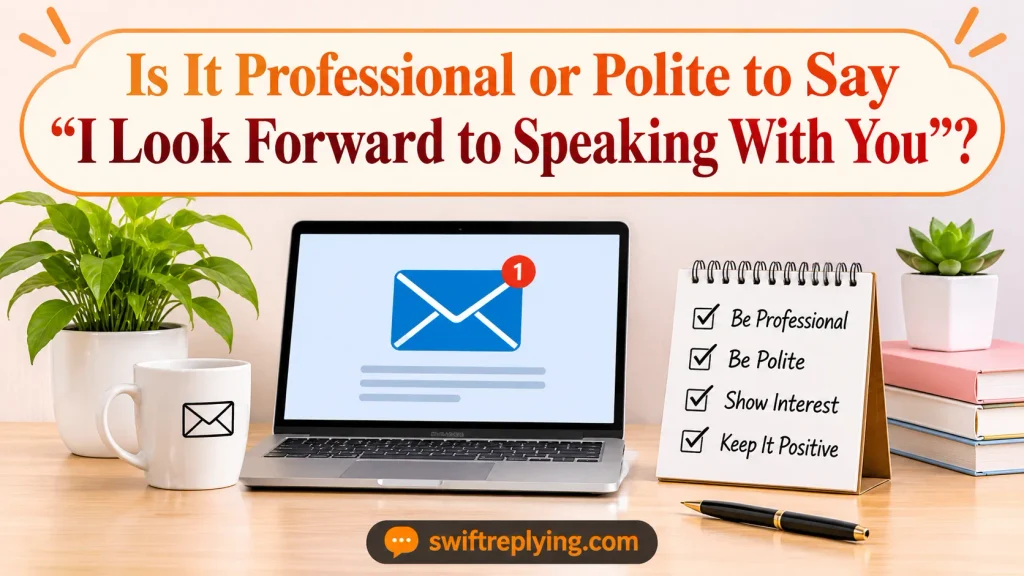
Yes. “I look forward to speaking with you” is both professional and polite. It is a suitable closing expression for many business emails, interview confirmations, meeting arrangements, and formal messages.
It communicates enthusiasm without sounding demanding or overly familiar.
However, the expression can sometimes feel repetitive if you use it in every email. Choosing an alternative helps your writing sound more varied and natural.
Consider these examples:
Professional:
“Thank you for your time and consideration. I look forward to discussing the opportunity with you.”
Friendly but professional:
“Thanks for arranging the meeting. I’m looking forward to our conversation.”
Formal:
“I welcome the opportunity to speak with you and discuss the proposal further.”
Casual:
“Sounds good! Talk to you soon.”
The most important thing is to match your wording to the relationship, communication channel, and level of formality. A phrase that sounds appropriate in a business email may feel unnecessarily formal in a friendly text.
1. I Look Forward to Our Conversation
“I look forward to our conversation” is one of the most natural alternatives to the original phrase. It communicates the same positive expectation while focusing on the upcoming conversation rather than the act of speaking.
This expression works particularly well in professional emails, interview confirmations, business discussions, and scheduled appointments. It sounds polished without being overly formal. You can use it when you already have a meeting planned and want to acknowledge it politely.
It is also useful when the conversation may involve sharing ideas, answering questions, or discussing an important matter.
Scenario
You have arranged a meeting with a potential business partner. You want to confirm the appointment and show that you are interested in discussing the partnership.
Examples
- Thank you for arranging the meeting. I look forward to our conversation.
- I appreciate your time and look forward to our conversation tomorrow.
- Your proposal sounds interesting. I look forward to our conversation.
- I look forward to our conversation and learning more about your company.
- Thank you for considering my application. I look forward to our conversation.
Tone
Professional, polite, confident, and welcoming. It creates a positive impression without sounding overly enthusiastic.
Explanation
This expression works because it communicates anticipation while keeping the wording simple. Unlike the original phrase, it does not specifically mention speaking. Therefore, it can also refer to a phone call, video meeting, or in-person discussion. It is a particularly natural choice when the conversation has already been scheduled.
Best Use
Business emails, job interviews, scheduled meetings, client communication, and professional follow-ups.
2. I’m Looking Forward to Speaking With You
This is a slightly more conversational version of the original phrase. The meaning remains almost identical, but using “I’m” makes the expression sound a little more personal and natural.
It is a good option when you want to communicate genuine interest without changing the professional tone. You can use it when replying to a recruiter, confirming an appointment, or arranging a discussion with someone you have recently contacted.
The expression works in both formal and friendly professional settings. It is also suitable for situations where you want to sound approachable rather than overly businesslike.
Scenario
A recruiter contacts you to arrange a job interview. You want to respond positively and confirm that you are interested in speaking with them.
Examples
- Thank you for reaching out. I’m looking forward to speaking with you.
- I’m looking forward to speaking with you about the available position.
- It was nice receiving your email. I’m looking forward to speaking with you.
- I’m looking forward to speaking with you during tomorrow’s interview.
- Thanks for making time for this discussion. I’m looking forward to speaking with you.
Tone
Friendly, professional, warm, and enthusiastic. It sounds personal while maintaining respect.
Explanation
The main difference is the conversational use of “I’m” instead of the more traditional “I look forward.” Both expressions are correct. However, the contraction makes this version feel slightly less formal. It is not a completely different meaning, but it offers a natural variation when you want your writing to feel less stiff.
Best Use
Recruiter emails, interview confirmations, professional introductions, and friendly business communication.
See Also: B Meaning in Texts: What Does B Mean in a Text Message?
3. I Look Forward to Connecting With You
“I look forward to connecting with you” is a useful alternative when you want to establish or strengthen a professional relationship. The word “connecting” suggests an opportunity to communicate, exchange ideas, or build a connection.
Unlike the original phrase, it does not necessarily promise a spoken conversation. The connection could happen through a phone call, video meeting, or even an initial professional interaction.
This expression is particularly appropriate when contacting someone for the first time. It sounds welcoming and shows interest in developing a professional relationship.
Scenario
You have contacted a professional through LinkedIn to discuss a possible collaboration. You want to end your message politely while showing interest in building a connection.
Examples
- Thank you for your response. I look forward to connecting with you.
- I appreciate the introduction and look forward to connecting with you.
- It would be wonderful to exchange ideas. I look forward to connecting with you.
- I look forward to connecting with you and exploring possible opportunities.
- Thank you for considering my request. I look forward to connecting with you soon.
Tone
Professional, approachable, respectful, and welcoming.
Explanation
This phrase works when the purpose is broader than simply having a conversation. It suggests building a relationship or opening communication. However, it is not always an exact replacement. If you have already scheduled a specific phone call, “I look forward to speaking with you” may be more precise.
Best Use
LinkedIn messages, networking, professional introductions, business partnerships, and first-time contacts.
4. I’m Eager to Speak With You
If you want to express stronger enthusiasm, “I’m eager to speak with you” is a good choice. The word “eager” communicates genuine interest and suggests that you are looking forward to the conversation.
This alternative is slightly more expressive than the original. It works particularly well when the upcoming discussion is important to you, such as a job interview, business opportunity, or project consultation.
However, it can sound more enthusiastic than necessary in routine business emails. Use it when you genuinely want to communicate excitement rather than simply acknowledge an appointment.
Scenario
You have received an invitation to discuss a promising job opportunity. You want your reply to show that you are interested and enthusiastic about the next step.
Examples
- Thank you for considering my application. I’m eager to speak with you.
- I’m eager to speak with you and learn more about the position.
- Your project sounds exciting, and I’m eager to discuss it further.
- I’m eager to speak with you about the possibilities for collaboration.
- I appreciate this opportunity and am eager to hear more about your plans.
Tone
Enthusiastic, confident, positive, and professional.
Explanation
“Eager” expresses a stronger level of interest than “look forward.” It makes your anticipation more noticeable and can help communicate enthusiasm. However, it may sound too intense for a simple scheduling confirmation. Choose it when the subject genuinely interests you.
Best Use
Job opportunities, exciting projects, business proposals, important discussions, and professional applications.
5. I Look Forward to Discussing This With You
This expression is especially useful when you already know what the upcoming conversation will involve. Instead of focusing on speaking in general, it highlights the specific topic you want to discuss.
It sounds professional, direct, and purposeful. You can use it when arranging a meeting about a project, reviewing a proposal, discussing a problem, or considering a business opportunity.
The phrase also shows that you are prepared to participate in a meaningful exchange rather than simply having a casual conversation.
Scenario
Your manager has asked you to discuss a new project during an upcoming meeting. You want to acknowledge the request and show that you are ready to contribute.
Examples
- Thank you for sharing the details. I look forward to discussing this with you.
- I look forward to discussing the proposal during our meeting.
- Your feedback is valuable, and I look forward to discussing this further.
- I look forward to discussing the next steps with you.
- Thank you for the opportunity. I look forward to discussing the project in more detail.
Tone
Professional, focused, respectful, and collaborative.
Explanation
This alternative works because it identifies the purpose of the upcoming conversation. It is more specific than the original expression and is particularly useful in business communication. However, it is best when there is an actual subject to discuss. For a general introductory call, “I look forward to our conversation” sounds more natural.
Best Use
Project meetings, business proposals, workplace discussions, client consultations, and professional follow-ups.
See Also: 17 Other Ways to Say “Near Me” (With Examples)
6. I’m Looking Forward to Our Discussion
“I’m looking forward to our discussion” is a polished expression that communicates interest in an upcoming exchange of ideas. It is especially appropriate when the conversation will involve opinions, questions, decisions, or professional matters.
Compared with the original phrase, this alternative places more emphasis on the discussion itself. It suggests that both people will have an opportunity to contribute.
You can use it when arranging a business meeting, confirming an interview, or preparing to discuss a proposal. It also sounds natural in professional emails when you want to show that you value the other person’s input.
Scenario
You and a colleague have scheduled a meeting to review a new marketing strategy. You want to express interest in hearing their ideas and sharing your own.
Examples
- Thank you for scheduling the meeting. I’m looking forward to our discussion.
- I’m looking forward to our discussion about the upcoming project.
- Your suggestions are appreciated, and I’m looking forward to our discussion.
- I’m looking forward to our discussion and exploring possible solutions.
- Thanks for sharing your initial thoughts. I’m looking forward to our discussion tomorrow.
Tone
Professional, thoughtful, collaborative, and positive.
Explanation
The word “discussion” suggests a more focused exchange than ordinary speaking. It is therefore a suitable alternative when the conversation has a clear purpose. It may sound slightly more formal than “talking with you,” but it remains natural in everyday workplace communication.
Best Use
Business meetings, strategy sessions, interviews, collaborative projects, and discussions involving decisions or feedback.
7. It Will Be a Pleasure to Speak With You
If you want to sound especially courteous, “It will be a pleasure to speak with you” is a thoughtful alternative. It communicates that you welcome the opportunity to talk and appreciate the chance to interact with the other person.
This expression is more formal and polished than the original. It works well when communicating with a new client, senior professional, business contact, or someone you have not met before.
However, it can sound overly formal in casual conversations. Use it when you want to create a respectful and welcoming impression.
Scenario
A potential client has accepted your invitation for an introductory call. You want to confirm the conversation with a courteous and professional message.
Examples
- Thank you for arranging the call. It will be a pleasure to speak with you.
- It will be a pleasure to speak with you and learn about your requirements.
- I appreciate your interest. It will be a pleasure to discuss this opportunity.
- It will be a pleasure to speak with you during our scheduled meeting.
- Thank you for your time. It will be a pleasure to connect and discuss the proposal.
Tone
Courteous, formal, respectful, and welcoming.
Explanation
This phrase expresses appreciation rather than simply anticipation. It makes the upcoming conversation sound like a welcome opportunity. It is a good choice for professional situations where courtesy matters. However, it can feel somewhat traditional, so a simpler alternative may work better with familiar colleagues.
Best Use
Client introductions, formal business emails, senior professionals, consultations, and first-time professional conversations.
8. I Welcome the Opportunity to Speak With You
“I welcome the opportunity to speak with you” is a strong professional alternative when you want to show that you genuinely value a conversation.
It is more formal than the original expression and places emphasis on the opportunity itself. It can be especially effective when responding to an invitation, applying for a position, or discussing a potential partnership.
This phrase communicates openness and willingness without sounding overly excited. It is also useful when you want your message to feel respectful and confident.
Scenario
A company representative invites you to discuss a potential position. You want to express appreciation and confirm your willingness to participate in the conversation.
Examples
- Thank you for the invitation. I welcome the opportunity to speak with you.
- I welcome the opportunity to discuss my qualifications and experience.
- I would welcome the opportunity to speak with you about the position.
- I welcome the opportunity to learn more about your company’s goals.
- Thank you for considering my application. I would welcome a conversation about the role.
Tone
Formal, confident, respectful, and professional.
Explanation
This alternative is particularly useful when responding to an opportunity rather than confirming an ordinary conversation. It shows that you are willing and interested in speaking. Notice that “I would welcome the opportunity” can sound slightly softer and more diplomatic than “I welcome the opportunity.”
Best Use
Job applications, interviews, business proposals, formal invitations, and professional correspondence.
9. I Look Forward to Hearing Your Thoughts
This expression is a good alternative when the upcoming communication involves receiving feedback, opinions, or suggestions. Rather than simply expressing interest in speaking, it tells the other person that you value their perspective.
It works particularly well when you have shared a document, proposal, idea, or recommendation. It is also useful when you want to encourage an open and collaborative conversation.
However, it is not an exact synonym for the original phrase. Someone can share their thoughts through an email or message without having a spoken conversation.
Scenario
You have sent your manager a project proposal and want to encourage feedback before making a final decision.
Examples
- I’ve attached the proposal for your review. I look forward to hearing your thoughts.
- Thank you for considering my suggestions. I look forward to hearing your thoughts.
- I would appreciate your feedback and look forward to hearing your thoughts.
- Please review the document when convenient. I look forward to hearing your thoughts.
- I’m interested in your perspective and look forward to hearing your thoughts.
Tone
Respectful, collaborative, thoughtful, and professional.
Explanation
This expression shifts the focus from speaking to listening. It shows that you are interested in the other person’s ideas and feedback. It is particularly effective when you want to invite a response. However, if a phone call or meeting is already scheduled, a more direct speaking-related alternative may be clearer.
Best Use
Feedback requests, proposals, workplace emails, collaborative projects, and professional discussions involving opinions.
See Also: 15 Other Ways to Say “You’re Welcome” (With Examples)
10. I’m Glad We’ll Have a Chance to Talk
If you want a warmer and more relaxed alternative, “I’m glad we’ll have a chance to talk” is a natural option. It communicates appreciation for the upcoming conversation without sounding overly formal.
This phrase is suitable when you already have a friendly relationship with the other person. It can also work in professional settings where the communication style is relaxed and approachable.
Unlike the original expression, it places more emphasis on being happy about the opportunity to talk. It is especially useful when you want to make someone feel comfortable before a conversation.
Scenario
A former colleague contacts you to arrange a catch-up call. You want to respond warmly and show that you appreciate the opportunity to reconnect.
Examples
- I’m glad we’ll have a chance to talk about everything soon.
- Thanks for making time. I’m glad we’ll have a chance to talk.
- I’m glad we’ll have a chance to discuss the new ideas together.
- It’s been a while, and I’m glad we’ll have a chance to talk.
- I’m glad we’ll have a chance to catch up during the call.
Tone
Warm, friendly, relaxed, and appreciative.
Explanation
This expression sounds more personal than the original. It focuses on appreciation rather than formal anticipation. It is particularly natural when speaking with familiar colleagues, friends, or professional contacts you already know. However, it may be too casual for a formal job application or communication with an unfamiliar senior executive.
Best Use
Friendly workplace conversations, familiar colleagues, personal catch-ups, and relaxed professional messages.
11. I Look Forward to Our Meeting
When a conversation is already scheduled as a meeting, this is a clear and practical alternative. It acknowledges the appointment while expressing positive anticipation.
The phrase is slightly different from the original because it refers specifically to a meeting rather than speaking in general. A meeting might involve a presentation, discussion, planning session, or face-to-face interaction.
It works in both formal and everyday professional communication. You can use it when confirming an appointment with a client, manager, colleague, or potential employer.
Scenario
A client has confirmed a meeting for Friday afternoon. You want to acknowledge the scheduled appointment and close your email politely.
Examples
- Thank you for confirming the time. I look forward to our meeting.
- I look forward to our meeting and discussing the project requirements.
- Thanks for sharing the agenda. I look forward to our meeting tomorrow.
- I appreciate your availability and look forward to our meeting.
- I look forward to our meeting and exploring the next steps.
Tone
Professional, organized, polite, and confident.
Explanation
This expression is effective because it connects your anticipation to a specific scheduled event. It is not a direct replacement when the conversation will happen informally or through an unscheduled phone call. However, for confirmed appointments, it is often more precise than the original phrase.
Best Use
Meeting confirmations, client appointments, workplace discussions, interviews, and scheduled consultations.
12. I’m Pleased We’ll Be Speaking
“I’m pleased we’ll be speaking” is a polished way to communicate that you are happy about an upcoming conversation.
It sounds slightly more formal than “I’m glad we’ll have a chance to talk.” The word “pleased” adds a sense of courtesy and professionalism without making the message overly enthusiastic.
This expression can be useful when responding to a professional introduction, confirming a business discussion, or arranging a conversation with someone you have not met before.
It is less common in casual texting, where simpler wording usually sounds more natural.
Scenario
A professional contact introduces you to a potential business partner. You want to acknowledge the introduction and express that you welcome the upcoming conversation.
Examples
- Thank you for the introduction. I’m pleased we’ll be speaking soon.
- I’m pleased we’ll be speaking about the proposed collaboration.
- I appreciate your invitation, and I’m pleased we’ll be speaking.
- I’m pleased we’ll be speaking and exploring this opportunity further.
- Thank you for arranging the call. I’m pleased we’ll be speaking tomorrow.
Tone
Polite, professional, composed, and welcoming.
Explanation
The expression communicates satisfaction about an upcoming conversation. It is useful when you want to sound courteous without using overly enthusiastic language. However, it can feel slightly formal in everyday conversation. “I’m looking forward to talking with you” is usually a more relaxed alternative.
Best Use
Professional introductions, formal correspondence, business calls, and conversations with new contacts.
13. I Appreciate the Opportunity to Connect
This expression is particularly useful when someone has offered you time, attention, or access to a professional conversation. It communicates gratitude while showing interest in establishing contact.
Unlike the original phrase, the main emphasis is on appreciation, not anticipation. It is therefore especially suitable when responding to introductions, networking invitations, or opportunities to meet someone professionally.
You can use it when contacting a recruiter, industry professional, potential mentor, or business partner. It creates a respectful impression without sounding overly formal.
Scenario
An experienced professional agrees to speak with you about their career journey. You want to thank them for making time to connect.
Examples
- Thank you for making time for me. I appreciate the opportunity to connect.
- I appreciate the opportunity to connect and learn from your experience.
- Thank you for the introduction. I appreciate the opportunity to connect.
- I appreciate the opportunity to connect and discuss potential collaboration.
- Your time means a lot, and I appreciate the opportunity to connect.
Tone
Grateful, professional, warm, and respectful.
Explanation
This phrase works because it acknowledges the other person’s willingness to communicate. It adds gratitude that the original expression does not explicitly contain. However, it is more suitable for establishing contact than confirming an already scheduled conversation. If you want to express anticipation more directly, combine it with a sentence about the upcoming discussion.
Best Use
Networking, professional introductions, mentorship requests, client relationships, and business opportunities.
14. I’ll Be Happy to Speak With You
“I’ll be happy to speak with you” is a polite expression that communicates willingness to have a conversation. It works especially well when someone has asked to speak with you or requested a call.
Unlike the original phrase, which emphasizes looking forward to a future conversation, this alternative focuses on your willingness to participate.
It is a practical choice when responding to requests from colleagues, customers, recruiters, or professional contacts. It sounds friendly and helpful without being overly enthusiastic.
Scenario
A customer asks whether you are available for a call to discuss a service issue. You want to respond positively and reassure them that you are available to help.
Examples
- Of course, I’ll be happy to speak with you about the issue.
- I’ll be happy to speak with you whenever you’re available.
- Thank you for reaching out. I’ll be happy to discuss this further.
- I’ll be happy to speak with you and answer any questions.
- Please let me know a convenient time. I’ll be happy to speak with you.
Tone
Helpful, polite, approachable, and professional.
Explanation
This expression communicates cooperation rather than excitement. It tells the other person that you are willing to make time for a conversation. It is not always interchangeable with the original because it can sound like a response to a request rather than anticipation of an already planned meeting.
Best Use
Customer service, workplace requests, professional assistance, scheduling calls, and responding to invitations.
See Also: 200+ Best Responses to “Nice to Meet You”
15. I Look Forward to Catching Up With You
When speaking with someone you already know, “I look forward to catching up with you” can sound more natural than the original phrase.
The expression suggests that you want to reconnect, exchange updates, and hear about what has been happening in the other person’s life. It is more personal than a standard professional closing.
You can use it with friends, former colleagues, relatives, and familiar professional contacts. However, it is not suitable for every first-time business conversation because “catching up” normally suggests an existing relationship.
Scenario
A former coworker contacts you after several months and suggests having a phone call. You want to respond in a friendly and welcoming way.
Examples
- It’s been too long! I look forward to catching up with you.
- I look forward to catching up and hearing about your new role.
- Thanks for reaching out. I look forward to catching up soon.
- I look forward to catching up with you over coffee.
- It will be lovely to reconnect. I look forward to catching up.
Tone
Friendly, relaxed, personal, and welcoming.
Explanation
“Catching up” implies that you have shared some history with the other person. It makes the conversation sound less formal and more personal. This is why it works well with familiar contacts but may sound strange when addressing a recruiter or someone you have never spoken with.
Best Use
Friends, former colleagues, relatives, old classmates, and familiar professional contacts.
16. It’ll Be Great to Talk With You
“It’ll be great to talk with you” is a simple and friendly alternative that expresses positive anticipation. It sounds more relaxed than the original phrase while remaining polite.
This expression is especially useful when communicating with someone you already know or when the professional relationship is relatively informal. It can also make a scheduled call feel more welcoming.
Unlike formal alternatives, it does not sound like a traditional business email closing. It is a good choice when you want your message to feel natural and conversational.
Scenario
A colleague from another department agrees to discuss a new idea with you. You want to confirm the conversation without making your response sound too formal.
Examples
- Thanks for arranging the call. It’ll be great to talk with you.
- It’ll be great to talk with you about the new project.
- I appreciate your time. It’ll be great to hear your ideas.
- It’ll be great to talk with you and explore some possibilities.
- Looking forward to Friday. It’ll be great to talk with you.
Tone
Friendly, positive, approachable, and conversational.
Explanation
The expression is effective because it communicates enthusiasm in everyday language. It sounds less formal than “I welcome the opportunity to speak with you,” making it a better fit for relaxed professional relationships. However, it may not be the strongest option for a highly formal business letter.
Best Use
Friendly workplace emails, informal business calls, familiar colleagues, and relaxed professional conversations.
17. I’m Excited to Chat With You
If the upcoming conversation is informal and you want to express genuine enthusiasm, “I’m excited to chat with you” is a natural option.
The word “excited” communicates stronger enthusiasm than the original phrase, while “chat” makes the expression sound relaxed and friendly.
This alternative works well with friends, teammates, familiar colleagues, and people you have already developed a comfortable connection with. It can also be appropriate in casual professional environments.
However, “chat” may sound too informal in a formal business email or an important interview confirmation.
Scenario
You have arranged a video call with a new teammate to discuss how you will work together. You want to make your message sound friendly and welcoming.
Examples
- Thanks for setting up the call. I’m excited to chat with you.
- I’m excited to chat with you and hear more about your ideas.
- It sounds like a fun project. I’m excited to chat about it.
- I’m excited to chat with you and get to know the team.
- Looking forward to our video call. I’m excited to chat with you.
Tone
Enthusiastic, casual, warm, and friendly.
Explanation
This phrase is more expressive than the original. It communicates excitement rather than simply polite anticipation. The word “chat” also suggests an informal exchange rather than a structured discussion. Use it when the relationship and communication setting allow a relaxed tone.
Best Use
Friendly messages, casual workplace communication, team introductions, informal video calls, and conversations with familiar contacts.
See Also: 200+ Best Responses to Comebacks for Haters and Critics
18. I Look Forward to Continuing Our Conversation
This alternative works particularly well when you have already exchanged messages or spoken with someone and expect to continue the discussion.
It communicates that the previous interaction was part of an ongoing conversation. It also suggests that you are interested in exploring the topic further.
The expression is useful in business correspondence, client follow-ups, interviews, and professional discussions. It sounds thoughtful and organized because it acknowledges the communication that has already taken place.
Scenario
You have completed an initial discussion with a potential client. They want to schedule another call to explore the project in more detail.
Examples
- Thank you for the helpful discussion. I look forward to continuing our conversation.
- I appreciate your feedback and look forward to continuing our conversation.
- It was great speaking with you. I look forward to continuing our conversation next week.
- I look forward to continuing our conversation about the proposed partnership.
- Thank you for sharing your ideas. I look forward to continuing our conversation soon.
Tone
Professional, thoughtful, collaborative, and respectful.
Explanation
This phrase is more specific than the original because it indicates that communication has already started. It is not the best choice for a first-time conversation because there is nothing to continue yet. However, it is an excellent option when you want to acknowledge an earlier exchange and express interest in the next discussion.
Best Use
Client follow-ups, second interviews, ongoing projects, business negotiations, and continuing professional discussions.
19. I Hope We Can Speak Soon
“I hope we can speak soon” is a softer alternative when a conversation has not yet been scheduled. It communicates interest while leaving the timing open.
Unlike the original phrase, this expression does not assume that a conversation will definitely happen. Instead, it expresses a wish or hope that both people will have an opportunity to talk.
It works well when reaching out to an old friend, following up with a professional contact, or suggesting a future conversation without putting pressure on the other person.
Scenario
You contact a former colleague to reconnect. You are interested in having a conversation but have not agreed on a specific date or time.
Examples
- It was lovely hearing from you. I hope we can speak soon.
- Please let me know when you’re available. I hope we can speak soon.
- I’d love to hear how things are going. I hope we can speak soon.
- Thank you for your response. I hope we can arrange a call soon.
- It would be great to discuss this further. I hope we can speak soon.
Tone
Gentle, friendly, hopeful, and considerate.
Explanation
This alternative is less definite than the original. It expresses a desire to communicate without suggesting that a meeting is already confirmed. That makes it useful when you are trying to arrange a conversation. However, if you have a scheduled appointment, “I look forward to our conversation” is more appropriate.
Best Use
Reconnecting, initial outreach, unscheduled conversations, friendly follow-ups, and suggesting future calls.
20. Talk to You Soon
“Talk to you soon” is one of the simplest and most casual alternatives. It is a friendly way to end a message when you expect to communicate with someone again in the near future.
Unlike the original phrase, it does not sound formal or particularly professional. Instead, it creates a relaxed and familiar impression.
You can use it with friends, family members, teammates, and colleagues you know well. It is especially suitable for text messages and informal emails.
Avoid using it in highly formal business correspondence unless you already have a relaxed communication style with the recipient.
Scenario
You have arranged a quick call with a teammate and want to end your message without using a formal business expression.
Examples
- Thanks for confirming. Talk to you soon!
- Sounds good. Talk to you soon.
- I’ll send you the details before our call. Talk to you soon!
- Great catching up with you. Talk to you soon.
- Everything is confirmed for tomorrow. Talk to you soon!
Tone
Casual, friendly, relaxed, and approachable.
Explanation
This expression is short and easy to understand. It works as a conversational closing rather than a formal statement of anticipation. It is not a perfect synonym because it does not explicitly communicate enthusiasm about the upcoming conversation. Instead, it assumes that another interaction will happen soon.
Best Use
Text messages, friendly emails, casual workplace chats, and conversations with people you know well.
Frequently Asked Questions
What is the best alternative to “I Look Forward to Speaking With You”?
“I look forward to our conversation” is an excellent general alternative. It sounds professional, polite, and natural. You can use it in business emails, interview confirmations, and scheduled meetings. For a warmer message, try “It’ll be great to talk with you.”
How can I say “I Look Forward to Speaking With You” professionally?
You can use several professional alternatives, including:
- I look forward to our discussion.
- I welcome the opportunity to speak with you.
- I look forward to discussing this with you.
- I appreciate the opportunity to connect.
- It will be a pleasure to speak with you.
These expressions work well in business emails, client communication, and formal correspondence.
Conclusion
Choosing a different way to say “I look forward to speaking with you” can make your emails and messages sound more natural, thoughtful, and engaging. The best alternative depends on your relationship with the recipient and the purpose of your conversation. For professional communication, try “I look forward to our discussion” or “I welcome the opportunity to speak with you.”
For friendly interactions, “It’ll be great to talk with you” or “Talk to you soon” may feel more comfortable. Remember that tone matters just as much as wording. Before sending your message, consider how the other person might interpret it. A simple, genuine expression of interest can make your communication feel more welcoming and leave a positive impression.

Ahmad Raza is a passionate communication writer and experienced content creator with multiple years of experience in the field of everyday responses and effective communication. Through his work at swiftreplying.com, he helps readers discover natural, thoughtful, and appropriate ways to respond in different conversations and social situations. His goal is to make communication easier, more confident, and more meaningful. Explore swiftreplying.com for practical response ideas and helpful communication tips.









2 thoughts on “20 Different Ways to Say ‘I Look Forward to Speaking With You’ (With Examples)”