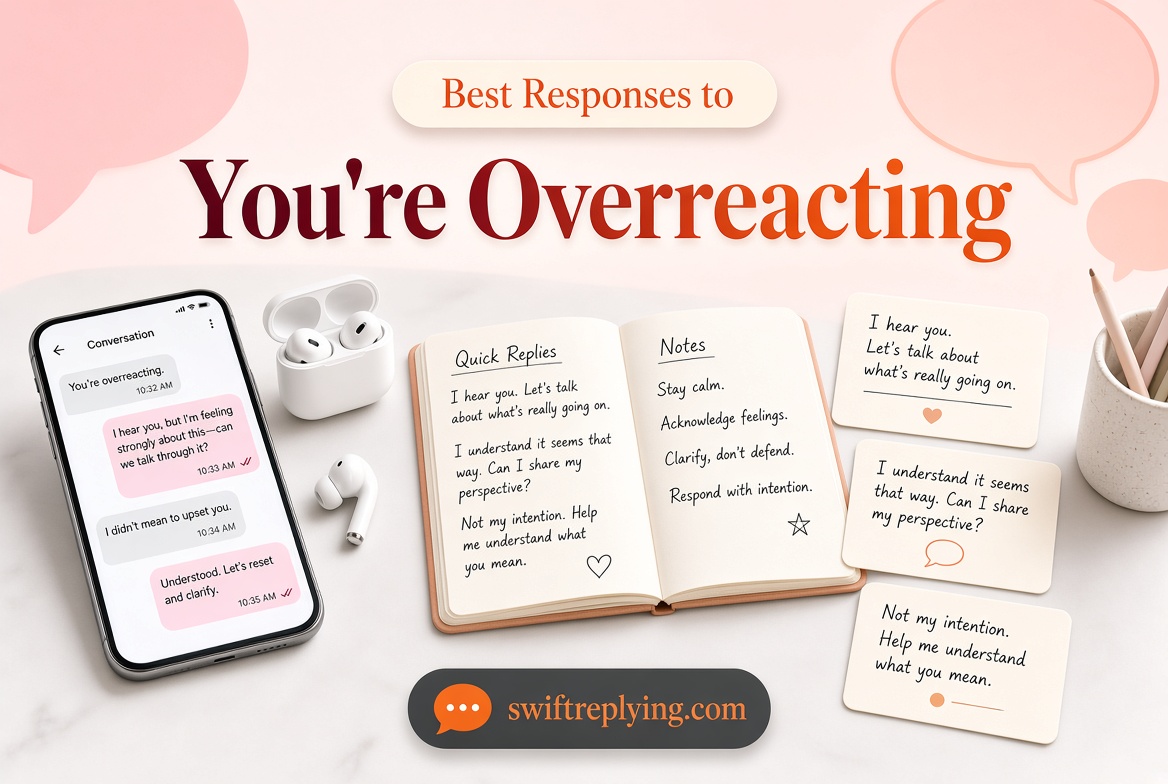
When someone says you’re overreacting, it can leave you feeling dismissed. The best responses to “You’re overreacting” help you express real feelings calmly.
A calm response can make feelings clear without creating a bigger argument. Knowing the right words helps you handle different situations with confidence. A thoughtful reply can also help you respond thoughtfully without losing your cool.
Whether speaking with friends, family, partners, or coworkers, context matters. You can validate your own emotions, redirect the focus, and explain the real issue.
A firm reply can protect your emotional boundaries while keeping communication respectful. These responses help you stay calm, avoid escalating conflict, and protect relationships.
Also Read This: 200+ Best Responses to Smart Replies for Being Ignored
Quick Answer
The best response to “You’re overreacting” depends on the situation and your relationship with the other person. You can stay calm and say, “Maybe it seems small to you, but it matters to me.” For a stronger reply, try, “I’m not overreacting; I’m explaining how this affected me.” A funny comeback can also lighten the mood when the situation is not serious.
How to Use These “You’re Overreacting” Responses
Use these responses based on the situation, your mood, and the person speaking to you. If you want to avoid conflict, choose a calm and respectful reply. If someone keeps dismissing your feelings, a firm response can help you set a clear boundary. For friends or casual conversations, a funny comeback may work better. The most important thing is to choose words that express your feelings without making the situation worse.
Calm Responses to “You’re Overreacting” for Peaceful Conversations
- I understand you see it differently, but this situation genuinely bothers me. 🙂
- Maybe it seems small to you, but it feels important to me.
- I’m trying to explain my feelings, not create an argument with you.
- I hear what you’re saying, but I still feel upset about this.
- I would appreciate it if you listened before deciding I’m overreacting.
- I’m staying calm because I want us to understand each other better.
- My reaction may seem strong, but there is a reason behind it.
- I’m not trying to make this bigger than it needs to be.
- Let’s talk about what happened instead of judging my reaction.
- I just want you to understand why this affected me.
Respectful Replies to “You’re Overreacting” When Feelings Matter
- My feelings are valid, even if you would react differently.
- You may not feel the same way, but please respect how I feel.
- I know you see things differently, and that is completely okay.
- I’m allowed to care about something that matters deeply to me.
- Your opinion matters, but so does my experience in this situation.
- I would rather explain my feelings than have them dismissed.
- Please try to understand my point before calling my reaction excessive.
- Something that feels small to you can still hurt someone else.
- I’m sharing my feelings because I want to be understood.
- I hope we can respect each other’s feelings without comparing them.
Firm Responses to “You’re Overreacting” When Someone Dismisses You
- I’m not asking you to agree, but I expect you to listen.
- Calling me dramatic does not solve the problem we are discussing.
- I know what I feel, and I will not apologize for that.
- You do not get to decide how strongly something affects me.
- If you disagree, explain your view instead of dismissing my feelings.
- I’m willing to talk, but I will not accept disrespect.
- My reaction deserves a conversation, not a label.
- Please address what happened instead of criticizing how I responded.
- I can handle disagreement without being told my feelings are wrong.
- If something hurt me, I have every right to mention it.
Funny Responses to “You’re Overreacting” to Lighten the Mood
- Maybe I am, but at least I’m keeping things interesting today. 😂
- I prefer the term emotionally committed to the situation. 😄
- Sorry, my drama department is working overtime today. 😂
- I promise I’ll submit my overreaction for review later. 😆
- Maybe my feelings came with extra volume today. 🔊
- I’m not overreacting, I’m simply giving this moment proper attention. 😂
- Consider it a limited edition emotional performance. 😄
- My reaction has arrived before my common sense today. 😂
- I like to keep ordinary moments slightly more exciting. 😆
- Fine, maybe I added a little extra seasoning. 🌶️
Clever Comebacks to “You’re Overreacting” Without Being Rude
- Maybe you should ask why I reacted before judging how I reacted.
- Calling it an overreaction does not explain why I feel this way.
- Sometimes strong reactions come from things people cannot immediately see.
- You might understand my response better if you knew the whole story.
- I’m reacting to the situation, not trying to entertain you.
- Perhaps we should discuss the reason instead of my emotional response.
- You can disagree with my reaction without making it meaningless.
- I think understanding comes before deciding someone is overreacting.
- My response makes sense when you consider everything that happened.
- Maybe the reaction is not the real issue here.
Short Responses to “You’re Overreacting” for Quick Replies
- I disagree, and I think my feelings deserve to be heard.
- Maybe it seems that way, but I feel differently.
- I’m reacting because this matters to me.
- I know how I feel, thank you.
- We simply see this situation differently.
- I’m allowed to feel upset about this.
- Please listen before judging my reaction.
- I have my reasons for feeling this way.
- I’m not looking for an argument here.
- Let’s focus on what actually happened.
Strong Responses to “You’re Overreacting” in Arguments
- I’m willing to discuss this, but I will not be dismissed.
- If you disagree, tell me why instead of attacking my reaction.
- We can solve the issue without minimizing what I feel.
- I’m upset because something happened, not because I enjoy conflict.
- Please focus on the problem instead of blaming my emotions.
- I expect honest communication, even when we disagree.
- My reaction may be uncomfortable, but that does not make it wrong.
- I’m trying to communicate clearly, so please hear me out.
- We cannot solve anything if my feelings are constantly dismissed.
- I will continue this conversation when we can speak respectfully.
Responses to “You’re Overreacting” From a Friend
- I know you mean well, but this really bothered me.
- As my friend, I hope you can understand why I’m upset.
- You know me well enough to know this is not random.
- I’m not blaming you; I just want you to understand.
- I appreciate your opinion, but I still feel hurt.
- Friends do not always agree, but they can still listen.
- Maybe you would react differently, but this affected me.
- I need understanding right now more than advice.
- I trust you enough to tell you when something hurts.
- Let’s talk honestly instead of brushing this off.
Responses to “You’re Overreacting” From a Partner
- I need you to hear my feelings instead of dismissing them.
- I’m telling you this because our relationship matters to me.
- I want understanding, not an argument about whether I reacted correctly.
- Please listen to what hurt me before defending yourself.
- My feelings are part of this relationship and deserve attention.
- I want us to solve this together, not blame each other.
- I’m not attacking you; I’m explaining what upset me.
- We can disagree while still respecting each other’s feelings.
- I need reassurance right now, not a reason to feel worse.
- Let’s work through this instead of dismissing what happened.
Mature Responses to “You’re Overreacting” During Conflict
- Let’s slow down and understand each other before making judgments.
- I would rather solve the problem than prove who is right.
- We can have different views without disrespecting each other.
- I’m open to hearing your side if you hear mine.
- Let’s discuss the facts and feelings without attacking each other.
- I want a solution, not another reason to argue.
- We both have feelings, so both perspectives deserve space.
- I’m willing to reflect on my reaction if you explain yours.
- Good communication means listening even when the message feels uncomfortable.
- Let’s focus on understanding instead of winning this conversation.
Responses to “You’re Overreacting” When You Feel Hurt
- I’m hurt, and pretending otherwise will not make it disappear.
- This affected me more than you may realize right now.
- I’m not trying to create drama; I’m genuinely hurt.
- I wish you would understand the reason behind my reaction.
- My feelings became strong because the situation meant something to me.
- I need some time before I can discuss this calmly.
- Please do not make my pain feel like another problem.
- I’m explaining my hurt because keeping it inside feels worse.
- I may be emotional, but that does not mean I’m wrong.
- I just want my feelings to be taken seriously.
Responses to “You’re Overreacting” When You Need Space
- I need some time to calm down before continuing this conversation.
- Let me process everything before we talk about it again.
- I’m taking space because I want to respond thoughtfully.
- I do not want this conversation to become more heated.
- Give me a little time, and we can discuss this calmly.
- I need a break right now, not another argument.
- I will talk when I feel ready to communicate clearly.
- Taking space does not mean I’m avoiding the problem.
- I need time to understand my feelings before explaining them.
- Let’s pause this conversation and return to it later.
Confident Responses to “You’re Overreacting” With Self-Respect
- I trust my feelings enough to speak about them honestly.
- I do not need permission to feel upset.
- I know myself, and I know why this matters.
- I can respect your opinion without accepting your judgment.
- My emotions do not make me weak or unreasonable.
- I will listen to you without ignoring what I feel.
- I am confident enough to express myself clearly.
- I do not need to hide my feelings to keep things comfortable.
- My feelings deserve respect, even when they are difficult.
- I can stand up for myself without being disrespectful.
Gentle Responses to “You’re Overreacting” to Avoid Conflict
- I understand your point, but I would like you to hear mine.
- Maybe we can talk about this without making each other defensive.
- I’m not looking for conflict; I just want to explain myself.
- Let’s take a breath and talk about what happened.
- I would rather understand you than argue with you.
- We can handle this calmly if we both listen.
- I respect your view, and I hope you respect mine too.
- I’m willing to meet halfway if we can communicate honestly.
- Let’s keep this conversation peaceful and focus on the real issue.
- I care about our relationship more than winning this argument.
Sarcastic Responses to “You’re Overreacting” for Casual Situations
- Of course, because apparently feelings come with a volume control. 😏
- Thanks for the professional review of my emotional response. 😂
- I’ll try to schedule my feelings more conveniently next time. 😌
- My reaction has been officially declared larger than necessary. 😂
- Good to know my emotions have received an expert evaluation. 😄
- I appreciate your very detailed analysis of my feelings today. 😏
- I’ll add “overreacting” to my list of unexpected talents. 😂
- Apparently, I missed the meeting where feelings became optional. 😆
- I’ll remember that my emotions need your official approval. 😉
- Thanks, I was wondering what my feelings should look like. 😂
Polite Responses to “You’re Overreacting” at Work
- I understand your concern, but this issue still needs attention.
- I’m raising this because I believe it affects our work.
- I would appreciate discussing the issue rather than my reaction.
- Let’s focus on the facts and find a practical solution.
- I’m open to feedback, but I would like specific concerns.
- My goal is to solve the problem, not create tension.
- I believe this deserves a calm and professional discussion.
- Please explain your concerns, and I’ll be happy to listen.
- I want to make sure the issue is understood clearly.
- Let’s keep the conversation focused on what needs to improve.
Responses to “You’re Overreacting” in Text Messages
- Maybe you do not understand why this matters to me yet.
- I’m not trying to argue; I’m just being honest.
- Please read what I said before deciding I’m overreacting.
- Text can make feelings harder to explain clearly.
- I would rather talk about this than misunderstand each other.
- I’m upset, but I’m still willing to talk calmly.
- There is more behind my reaction than you may realize.
- I’m not asking you to agree with everything I feel.
- Let’s talk when we can understand each other better.
- I hope you can hear the meaning behind my words.
Responses to “You’re Overreacting” From Family Members
- I know you care about me, but this still matters.
- Family does not always agree, but feelings still deserve respect.
- I’m sharing this because I feel safe being honest with you.
- Please do not dismiss me just because you see things differently.
- I know you may have another perspective, and I respect that.
- I need you to listen before telling me how to feel.
- This situation affects me personally, even if it seems small.
- I’m not trying to upset anyone; I’m explaining my feelings.
- I hope we can discuss this without making it personal.
- I value our relationship, which is why I want to talk honestly.
Responses to “You’re Overreacting” When Someone Crosses a Boundary
- I’m speaking up because a boundary was crossed.
- My reaction is connected to something that made me uncomfortable.
- I need you to respect the boundary I clearly explained.
- Calling me sensitive does not change what happened.
- I am allowed to decide what makes me uncomfortable.
- Please respect my limits instead of questioning my reaction.
- I’m not being difficult; I’m protecting my peace.
- A boundary is not an invitation for an argument.
- I expect my personal limits to be taken seriously.
- If you respect me, please respect the boundary I set.
Smart Responses to “You’re Overreacting” That End the Argument
- We clearly see this differently, so I think we should pause here.
- I have explained my feelings, and I will not keep defending them.
- You do not have to agree, but I have said my part.
- I’m done arguing about whether my feelings are valid.
- We can revisit this when we are both calmer.
- I respect your opinion, but I’m comfortable with my position.
- There is no need to keep repeating the same disagreement.
- I have heard you, and I hope you heard me too.
- Let’s leave this conversation here before it becomes unhealthy.
- I’m choosing peace instead of continuing an unproductive argument.
Supportive Responses to “You’re Overreacting” for Someone Else
- Your feelings matter, even when someone else does not understand them.
- You are allowed to feel upset about something that hurt you.
- Do not let someone else decide whether your feelings are real.
- Take your time and explain yourself when you feel ready.
- You deserve to be heard without being called dramatic.
- It is okay to need support when something feels difficult.
- You can stay calm while still standing up for yourself.
- Your reaction may be emotional, but your feelings still matter.
- You do not have to pretend everything is fine.
- Speak honestly, and choose words that protect your peace.
Best Responses to “You’re Overreacting” for Different Situations
- I’m reacting to what happened, not creating a problem from nothing.
- This may look different from my side than it does yours.
- I think the best choice is to talk before making assumptions.
- I’m trying to handle this honestly instead of hiding my feelings.
- Maybe my response surprised you, but it has a reason.
- I would rather explain myself than let this become a misunderstanding.
- I’m not asking for perfection, only some understanding.
- We can disagree about the situation without insulting each other.
- I want to move forward, but first I need to be heard.
- Sometimes the best response is simply staying calm and honest.
FAQs
How should you respond when someone says you’re overreacting?
A calm response can help you explain your feelings, make feelings clear, and maintain a respectful conversation without escalating conflict.
What can you say when you feel dismissed or misunderstood?
Use a firm response that explains your emotional experience and personal perception while showing self-awareness and assertiveness.
How do you handle being called overly sensitive?
You can validate your own emotions, trust your feelings, and express your perspective without letting someone invalidate your experience.
How can you respond without losing your cool?
Practice emotional regulation, manage emotions, and use a measured response that supports conflict management and avoids escalating the situation.
What is a respectful way to respond to “You’re overreacting”?
Try a respectful reply that acknowledges context, sets clear boundaries, and encourages healthy communication during difficult conversations.
Conclusion
The best responses to “You’re overreacting” help you express your perspective while protecting your emotional needs. A calm response, self-validation, and clear boundaries can prevent conflict and support healthy communication. Whether you need a firm response or respectful reply, choose words that help you stay calm, communicate clearly, and maintain stronger relationships.