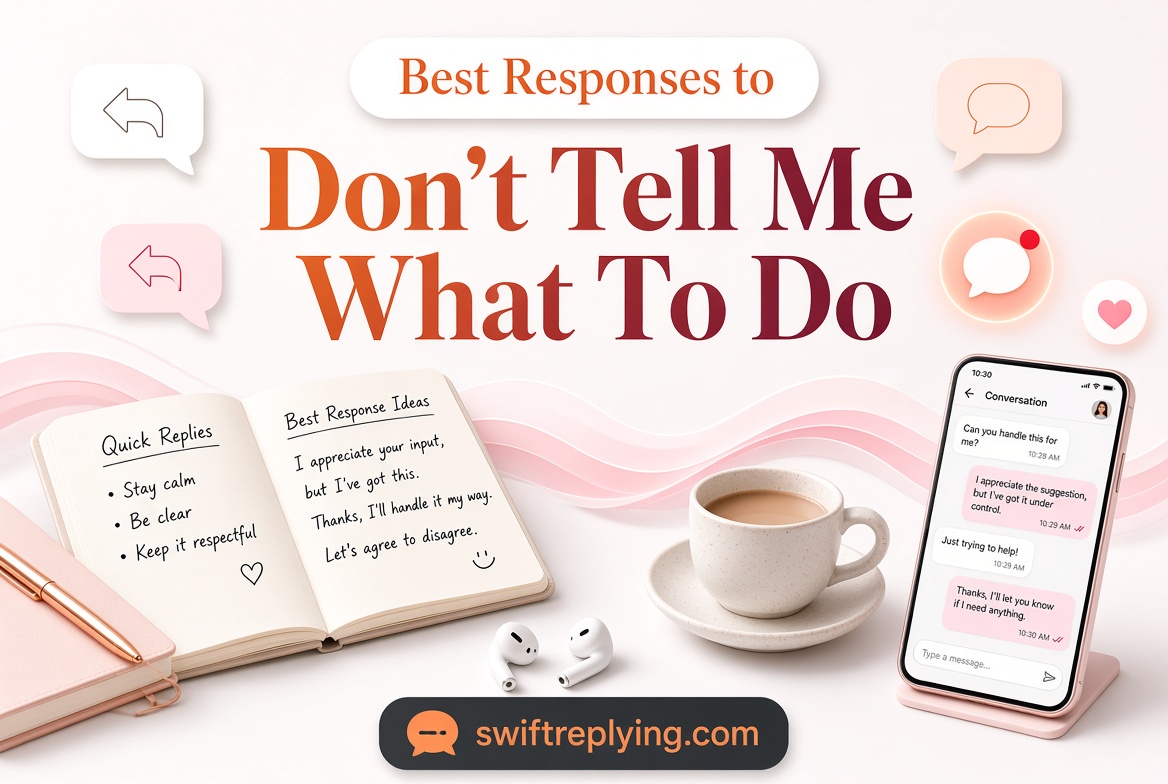
When someone says “Don’t Tell Me What To Do,” emotions can rise quickly. A right response requires confidence, respect, and choosing the right words. This collection offers best responses for different situations and conversations. You’ll find calm replies, clever responses, and firm answers here.
Whether texting friends, handling tension, or facing serious moments, tone matters. Some replies use humor, while others emphasize respect and personal boundaries. The goal is natural communication that sounds confident without creating unnecessary conflict. Choose a response that fits your situation, relationship, and conversational tone.
Quick Answer
The best response to “Don’t tell me what to do” depends on the situation. You can stay calm with, “I’m not telling you what to do, I’m only sharing my thoughts.” For a playful moment, try, “Fair enough, you clearly have your own rulebook.” If the person sounds rude, a firm reply like, “You can make your own choice, and I can share my opinion” keeps the conversation respectful.
How to Use These “Don’t Tell Me What To Do” Responses
Use these responses based on the mood, relationship, and reason behind the comment. A funny reply works well with friends, while a calm response is better during a serious talk. If someone is being rude, stay firm without becoming insulting. The goal is to express yourself clearly while avoiding a needless argument. Pick a response that sounds like something you would naturally say.
Calm Responses to “Don’t Tell Me What To Do”
- I’m not trying to control you, I’m simply sharing what I think might help.
- You are free to decide, and I respect whatever choice you make.
- I understand, and I was only offering my opinion, not giving orders.
- No worries, you can make your own decision without any pressure.
- I hear you, and I did not mean to sound controlling at all.
- That’s fair, but sometimes advice can be helpful when offered kindly.
- You know yourself best, so I’ll let you decide what works.
- I’m only trying to help, but I understand if you disagree.
- There is no pressure from me, so choose whatever feels right.
- I respect your choice, even when my opinion happens to differ. 🙂
Polite Responses to “Don’t Tell Me What To Do”
- I understand your point, and I’ll be more careful with my advice.
- I meant that as helpful advice, not as an instruction or demand.
- You are right to make your own choices, and I respect that.
- I apologize if my words sounded too forceful or demanding earlier.
- I was only concerned about you, but I understand your feelings.
- Thanks for being honest; I’ll give you more space to decide.
- I respect your independence, even if I sometimes worry about you.
- I understand, and I hope we can discuss this without tension.
- Your decision is yours, and I never meant to take that away.
- I appreciate your honesty, and I’ll keep my advice more respectful.
Funny Responses to “Don’t Tell Me What To Do”

- Fine, I’ll stop giving orders and start accepting suggestions instead. 😂
- Deal, but my unofficial advice department remains open during emergencies.
- Relax, I’m not your boss, I just have excellent opinions. 😄
- Fair enough, but admitting I’m right is still completely optional.
- Got it, Captain Independence, I’ll keep my commands safely stored away.
- No orders here, just free advice with questionable customer service. 😂
- Alright, your freedom has officially been restored effective immediately.
- Fine, I’ll put my imaginary boss badge back in the drawer.
- Message received, loud and clear, without needing a dramatic announcement.
- Okay, okay, I surrender my imaginary authority for today. 😆
Clever Responses to “Don’t Tell Me What To Do”
- I’m not controlling your choices, I’m simply pointing out another option.
- You can ignore my advice, but you cannot stop me caring.
- Independence is great, but listening can sometimes prevent unnecessary mistakes.
- I gave you an opinion, not a command from headquarters.
- You control your decisions, while I control whether I share advice.
- I respect your freedom, and you can respect my perspective too.
- Sometimes advice sounds like control when emotions are already running high.
- You do not have to agree with me to hear me.
- I can offer guidance without expecting you to follow it.
- Your choices belong to you, but honest feedback can still matter.
See Also: 200+ Best Responses to Breakup Text Reply Tips
Confident Responses to “Don’t Tell Me What To Do”
- I’m confident enough to speak honestly without expecting you to agree.
- You can make your own choices, but I can state my opinion.
- I respect your independence, and I expect the same respect back.
- I’m not afraid to say what I think when something matters.
- You do not have to follow my advice, but hear me first.
- I know you can decide for yourself, so there is no pressure.
- I’m sharing my thoughts because I care, not because I control you.
- You have your opinion, and I have mine, and that’s okay.
- I will respect your decision, even when I strongly disagree.
- Being honest does not mean I am trying to control you.
Short Responses to “Don’t Tell Me What To Do”
- Fair enough, you can decide for yourself from here.
- I’m only sharing my opinion, not giving you orders.
- Your choice, I completely respect that.
- Got it, I’ll leave the decision with you.
- No problem, you know what works best.
- Understood, I was only trying to help.
- Okay, message received loud and clear.
- That’s fair, I respect your choice.
- Your decision, your responsibility, your call.
- Alright, I’ll step back and let you decide.
Respectful Comebacks to “Don’t Tell Me What To Do”
- I respect your independence, so please respect my right to speak honestly.
- You can disagree with me without turning this into an argument.
- I am not demanding anything, so there is no need to get defensive.
- We can have different opinions without disrespecting each other.
- I respect your choices, and I hope you respect my concerns.
- You do not need to follow my advice for it to matter.
- I’m speaking because I care, not because I want control.
- Let’s keep this respectful and focus on the actual issue.
- You are free to disagree, and I am free to explain.
- Strong opinions are fine when both people stay respectful. 🤝
Sarcastic Responses to “Don’t Tell Me What To Do”
- Absolutely, because clearly nobody has ever needed advice before. 😉
- Sure, I’ll cancel my imaginary appointment as your personal adviser.
- Understood, your independence has been noted for the official record.
- Fine, I’ll stop pretending my advice comes with mandatory instructions.
- Of course, because listening for five seconds would be completely unreasonable. 😏
- No worries, I’ll save my brilliant advice for another audience.
- Alright, boss, your commands have officially been canceled.
- Got it, I’ll return my imaginary authority badge immediately.
- Sure thing, I would hate to interrupt your independent decision-making.
- Fine, I’ll let you discover the lesson completely on your own. 😄
Smart Responses to “Don’t Tell Me What To Do”
- You are responsible for your choices, so my advice is simply optional.
- Listening to advice does not mean surrendering control over your life.
- I can share concerns without expecting you to change your decision.
- Independence and openness can exist together without creating unnecessary conflict.
- You can protect your freedom while still considering another viewpoint.
- My goal is understanding, not control, so let’s talk calmly.
- A different opinion does not automatically mean someone is giving orders.
- You can disagree while still hearing why I feel concerned.
- Sometimes one outside perspective can reveal something we missed ourselves.
- Good communication means sharing thoughts without forcing anyone to agree.
Friendly Responses to “Don’t Tell Me What To Do”
- Hey, I’m just looking out for you, nothing more than that.
- No worries, friend, I know you can handle yourself.
- I’m only teasing you, so please do not take it seriously.
- Fair enough, I’ll leave you to make your own call.
- You know I care, even when my advice gets a little loud.
- I promise I’m helping, not trying to become your manager. 😄
- Alright, I hear you, and we are still good.
- I respect your choice, buddy, so no hard feelings.
- I only said it because I care about what happens.
- Okay, friend, your decision is safe with you.
Flirty Responses to “Don’t Tell Me What To Do”
- I’m not telling you what to do, I’m just trying to charm you. 😉
- Fine, I’ll stop giving advice if you keep looking that cute.
- You can ignore my advice, but you cannot ignore my attention.
- I only give suggestions when someone interesting catches my attention.
- Maybe I like you enough to care what happens next. ❤️
- I promise, I’m much better at flirting than giving orders.
- You can make your own choices, but let me spoil you sometimes.
- I’m not bossy, I just happen to have excellent ideas for us.
- If I sound persuasive, maybe you secretly enjoy listening to me.
- Fine, no orders, just one charming suggestion from me. 😏
Savage Responses to “Don’t Tell Me What To Do”
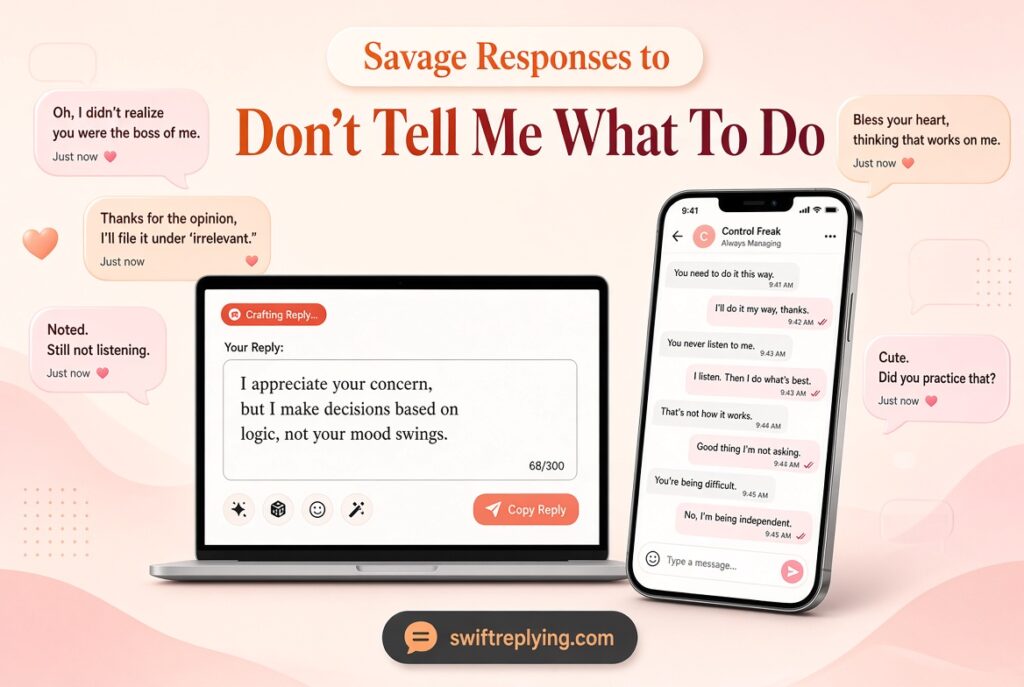
- Then stop acting like you need someone else to blame.
- You are free to choose, so own whatever happens next.
- I’m not controlling you, but I will not pretend bad choices are good.
- If you want independence, take responsibility for your decisions too.
- Nobody is forcing you, so there is nothing to fight about.
- You asked for honesty, and now you are upset receiving it.
- Make your choice, but do not expect me to hide my opinion.
- Independence means making choices without demanding everyone else agrees.
- You can ignore my words, but consequences will still speak.
- I am not your boss, and I am not your enemy either.
Firm Responses to “Don’t Tell Me What To Do”
- I’m not forcing you, but I will speak when something concerns me.
- You can make your decision, but I will protect my boundaries.
- I respect your choices, and I expect you to respect mine.
- I am willing to discuss this, but I will not argue.
- You do not have to listen, but you should hear me out.
- I will not control you, and I will not accept disrespect.
- We can disagree without turning this into a personal fight.
- I have explained my concern, and the final choice belongs to you.
- You are responsible for your decision, just as I am for mine.
- I’m setting a boundary, not trying to control your behavior.
Responses to “Don’t Tell Me What To Do” at Work
- I’m sharing a work concern, not trying to tell you how to live.
- Let’s focus on the task instead of making this personal.
- I respect your role, and I only want the work handled well.
- You can make your choice, but workplace rules still apply.
- I’m offering feedback because the outcome affects the whole team.
- We can discuss different approaches and choose the best one together.
- My goal is better teamwork, not control over your decisions.
- I respect your experience, so let’s find a solution together.
- If you disagree, explain your concern and we can discuss it.
- Professional feedback is meant to improve work, not create conflict.
Responses to “Don’t Tell Me What To Do” From Friends
- I’m your friend, so sometimes I’ll tell you what I honestly think.
- You do not have to follow my advice, but I care.
- Fair enough, I’ll stop pushing and let you choose.
- I only said something because I would want honesty from you.
- Friends can disagree without turning every conversation into a fight.
- I respect your choice, even if I would choose differently.
- You know I mean well, even when my advice sounds strong.
- I’m not trying to run your life, just looking out for you.
- Do what feels right, and I’ll support you either way.
- We can drop the argument and move on from this.
Responses to “Don’t Tell Me What To Do” From Family
- I’m saying this because I care, not because I want control.
- You are grown enough to choose, and I respect that.
- I may worry about you, but I cannot make your decisions.
- We can disagree while still remembering that we are family.
- I only want what is best for you, even if I sound firm.
- Your choices belong to you, but my concerns come from love.
- I hear you, and I will try not to push too hard.
- You can decide for yourself, and I will respect your choice.
- Family advice can feel strong, but it usually comes from care.
- Let’s talk calmly instead of letting one sentence create distance.
Playful Responses to “Don’t Tell Me What To Do”
- Fine, but I reserve the right to make silly suggestions. 😂
- Okay, boss, I’ll keep my advice inside my imaginary notebook.
- Deal, but you cannot blame me when your plan goes sideways. 😜
- Alright, freedom granted, effective immediately and without paperwork.
- Fine, I’ll let you be the captain of this adventure.
- No orders, just friendly suggestions wearing a tiny disguise. 😄
- Okay, okay, I officially resign from the advice department.
- Your decision has been approved by the committee of absolutely nobody.
- Fine, go ahead, but make the story interesting at least.
- I hear you, captain, and I am stepping away from the controls.
Mature Responses to “Don’t Tell Me What To Do”

- I understand your need for independence, and I respect your decision.
- I can share my concerns without expecting you to follow them.
- Healthy conversations allow both people to speak and make choices.
- I would rather discuss this calmly than turn it into conflict.
- You have control over your life, and I respect that fully.
- My intention is to communicate, not control or pressure you.
- We may disagree, but we can still treat each other kindly.
- I trust you to make the choice that feels right.
- I have said what I needed to say, so I’ll step back.
- Respect works both ways, especially when opinions are different.
Clever Comebacks to “Don’t Tell Me What To Do”
- I’m not telling you what to do, I’m explaining what I see.
- You can reject my advice without rejecting the entire conversation.
- A suggestion only becomes an order when someone refuses to listen.
- I gave you an option, not a rule written in stone.
- You control the decision, but information can still help.
- Maybe the problem is not my advice, but how it sounds.
- You are free to choose, and I am free to care.
- Listening does not mean agreeing, and disagreeing does not mean fighting.
- I can respect your choice without pretending I agree.
- Sometimes the best response is simply hearing another perspective.
Kind Responses to “Don’t Tell Me What To Do”
- I’m sorry if I sounded controlling because that was never my intention.
- I care about you, but I also respect your right to choose.
- Take your time and decide what feels best for you.
- I’m here to support you, even if you choose differently.
- You deserve the freedom to make your own decisions.
- I hope you know my advice comes from a good place.
- I understand why you reacted that way, and I respect your feelings.
- There is no pressure from me, so follow what feels right.
- I care enough to be honest, but not to control you.
- We can leave this topic alone if you would prefer.
Responses to “Don’t Tell Me What To Do” in Texts
- I’m not trying to control you, just sharing my honest thoughts here.
- Fair enough, I’ll stop pushing and let you decide. 👍
- You know what is best for you, so I respect your call.
- I only meant to help, but I understand your point.
- No pressure at all, just consider what I said.
- Okay, I hear you, and I will give you space.
- Your choice, your call, I completely respect that.
- I was worried about you, but I should not have pushed.
- Let’s not argue over this, we can talk later.
- I care about you, but I will respect your decision. ❤️
Best Responses to “Don’t Tell Me What To Do”

- I’m not here to control you, I’m here to be honest.
- You can make your own choice, and I will respect it.
- I’m offering advice, not demanding that you follow it.
- I understand, and I’ll step back from the conversation.
- You do not have to agree with me to respect me.
- I care about you, so sometimes I will speak honestly.
- Your decision is yours, but my opinion is still valid.
- We can disagree without making this bigger than it needs to be.
- I respect your independence, and I hope you respect my honesty.
- Fair enough, do what feels right and take care of yourself. ❤️
FAQs
What Is the best response to “Don’t Tell Me What To Do”?
A calm response showing confidence and respect can prevent a tense conversation. Try choosing the right words while keeping your communication situation in mind.
How can I give a firm but respectful reply?
Use a firm answer with assertive communication and a respectful tone. This helps you stand your ground without creating unnecessary conflict.
What are some clever responses for casual conversations?
A clever comeback, witty response, or humorous response can keep casual chats relaxed. Choose smart replies that match the conversational tone and relationship.
How should I respond when someone gets defensive?
A calm response with emotional awareness can help handle situations thoughtfully. Try active listening, validation, and supportive communication before responding.
Can these replies work in texts and relationships?
Yes, these text replies can suit text conversation, personal relationships, and friendly conversations. Consider relationship dynamics, personal boundaries, and natural texting when choosing your reply.
Conclusion
The best responses to “Don’t Tell Me What To Do” balance confidence, respect, and personal boundaries. Whether you choose a calm response, clever comeback, or firm answer, match your tone to the situation and relationship. Strong communication skills help you stand your ground while keeping conversations natural, respectful, and productive.